

Blog
AC Lines Rig Components Guide

Build your AC-1, AC-3 or AC-0 rig around the performance you can actually use.
Masts, booms, harness lines, adjustable outhauls and extensions all change the way your sail feels. The question is not simply how much you want to spend.
How much power, reflex and direct performance do you want to handle?
Andrea Cucchi | Point-7 R&D
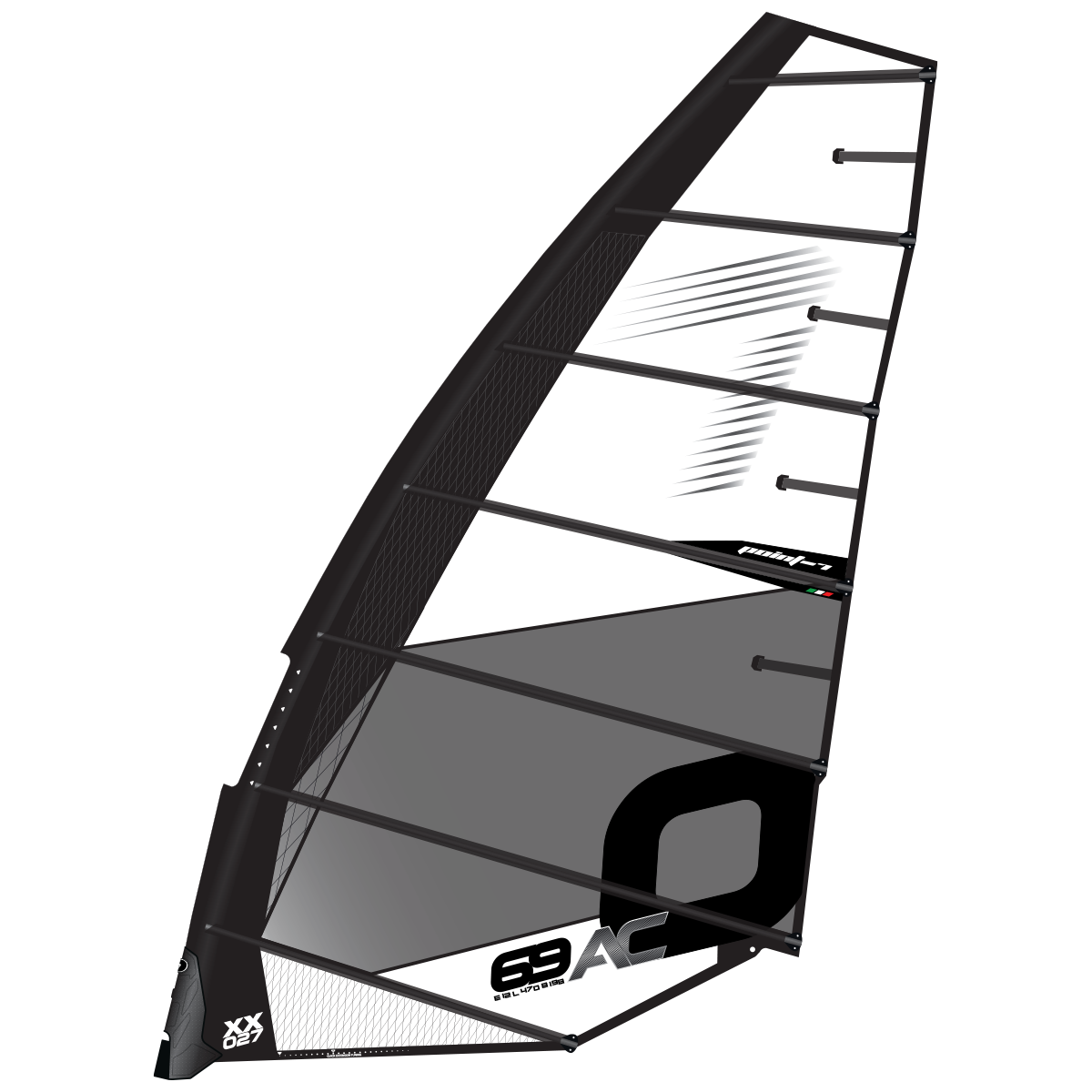
Choose the horsepower you can control
When you choose an AC-1, AC-3 or AC-0, you are normally looking for one thing: speed.
If easy freeride sailing were the priority, there would be more forgiving choices such as the Rush Blasters. The AC range is different. These sails are designed around acceleration, stability, control and speed.
But this does not mean everybody should automatically buy the stiffest, most reactive and most expensive component available.
A component can reduce some reflex or directness and still make you faster if it allows you to keep the board flying, remain locked in and use less physical energy.
That is what we mean when we talk about compromise.
Compromise does not mean buying B-series equipment. It means deciding how much power, reflex, comfort and physical demand you want from the complete rig.
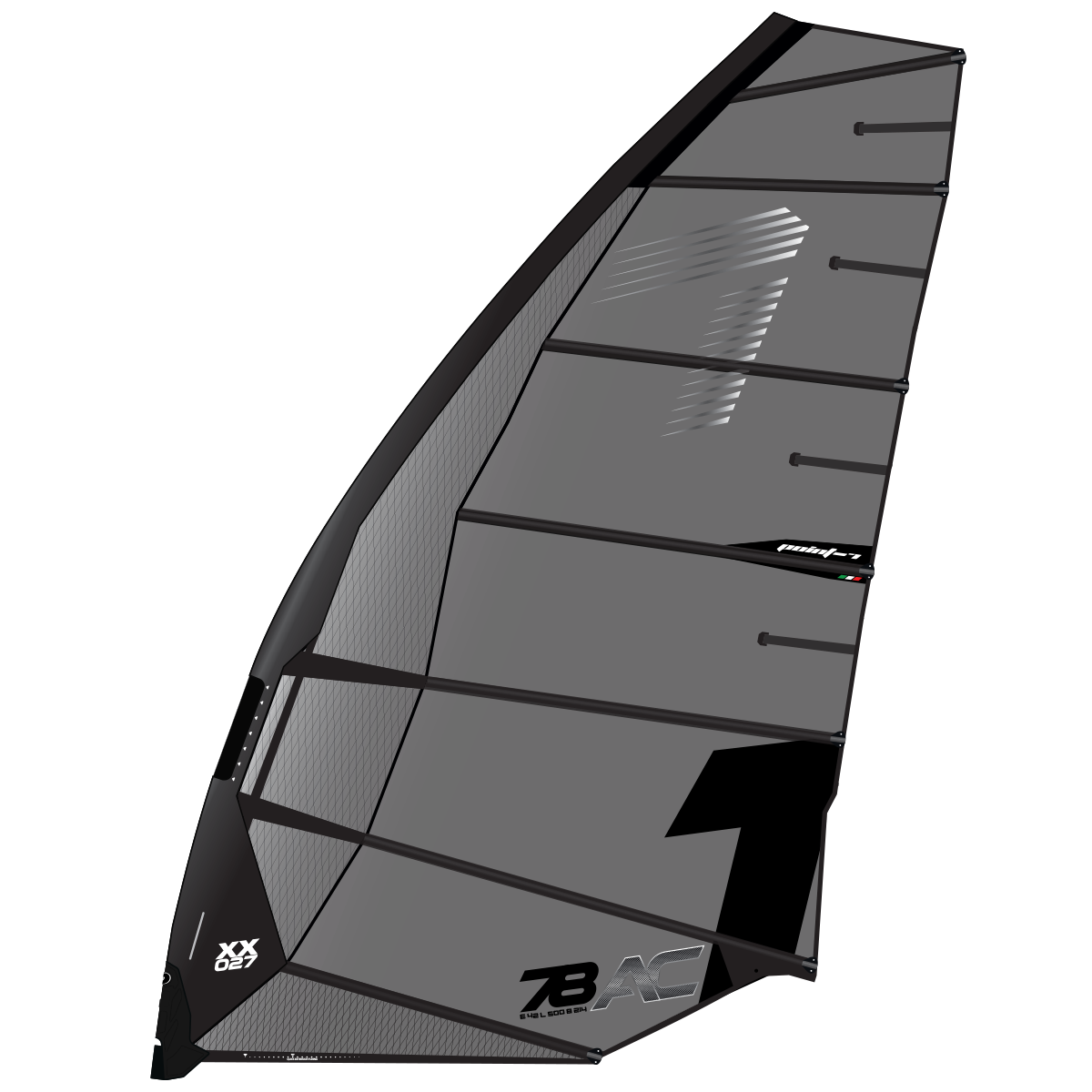
AC-1 LTD
Maximum power, drive and acceleration.
The AC-1 has the full racing mast sleeve and is designed to give the maximum amount of usable power to the rider. If you have the fitness, technique and ability to transfer that power into the board and fin, this is the no-compromise option.
But additional power is only useful when you can control it. If you cannot, that additional drive starts to feel like weight in your hands. You use more energy, become less efficient and eventually become slower.
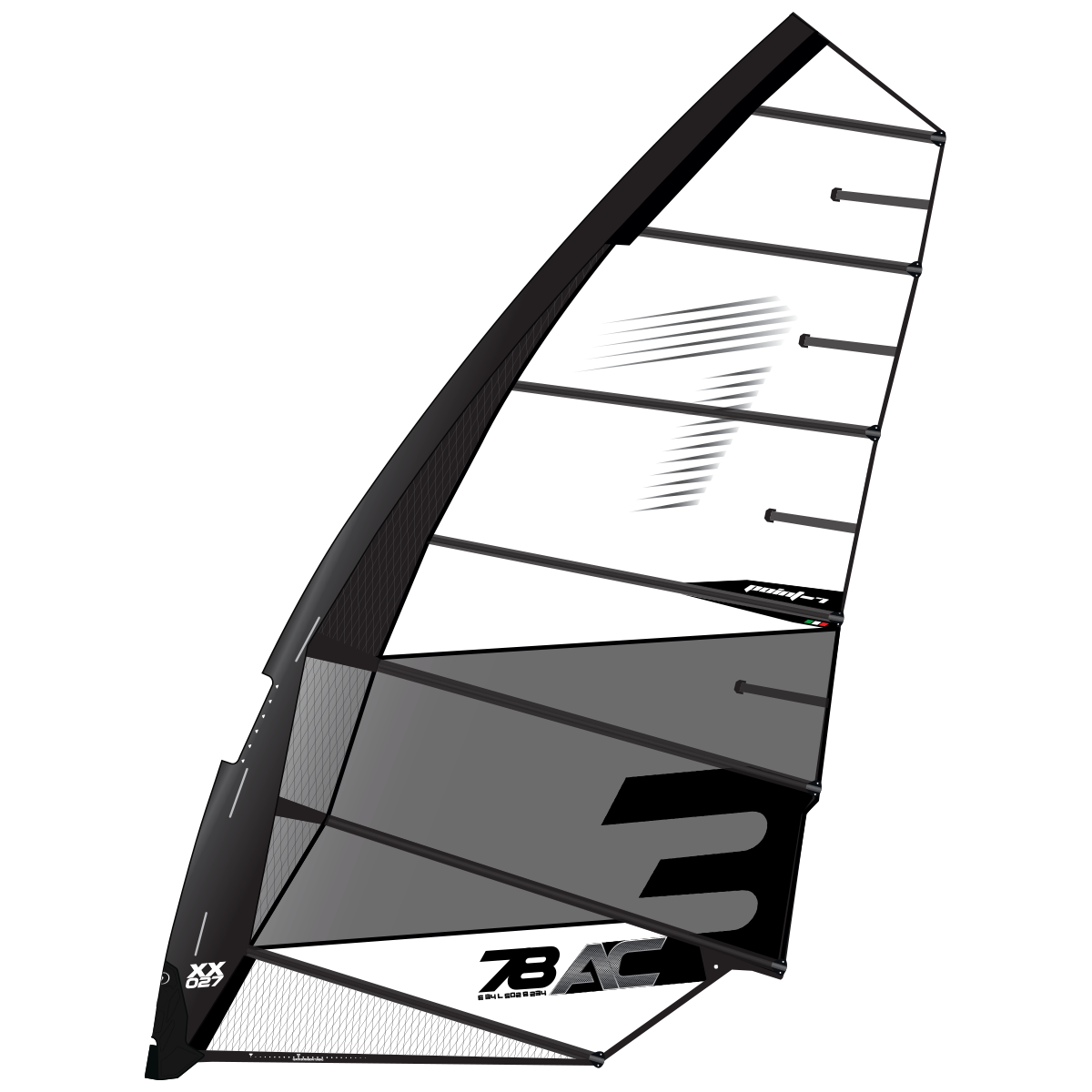
AC-3
A step down in physical demand without moving away from real slalom performance.
The narrower mast sleeve reduces some of the physical demand of the AC-1 while keeping the race-bred profile, acceleration and stability.
For many riders, the AC-3 can therefore be faster in the real world than an AC-1 simply because they can use more of its performance for longer.
AC-0
No cams, a much simpler sleeve and the least physically demanding option of the three.
You give away some of the direct drive of the cambered sails but gain easier handling, simplicity and a lighter feeling.
The AC-0 is for the rider who wants maximum no-cam speed without the physical demand and complexity of a full cambered race rig.
| Sail | Power & Drive | Physical Demand | Best For |
|---|---|---|---|
| AC-1 LTD | Maximum | Highest | Maximum racing performance |
| AC-3 | High | Medium-high | Race performance with less fatigue |
| AC-0 | More manageable | Lowest | Maximum no-cam performance and easier handling |
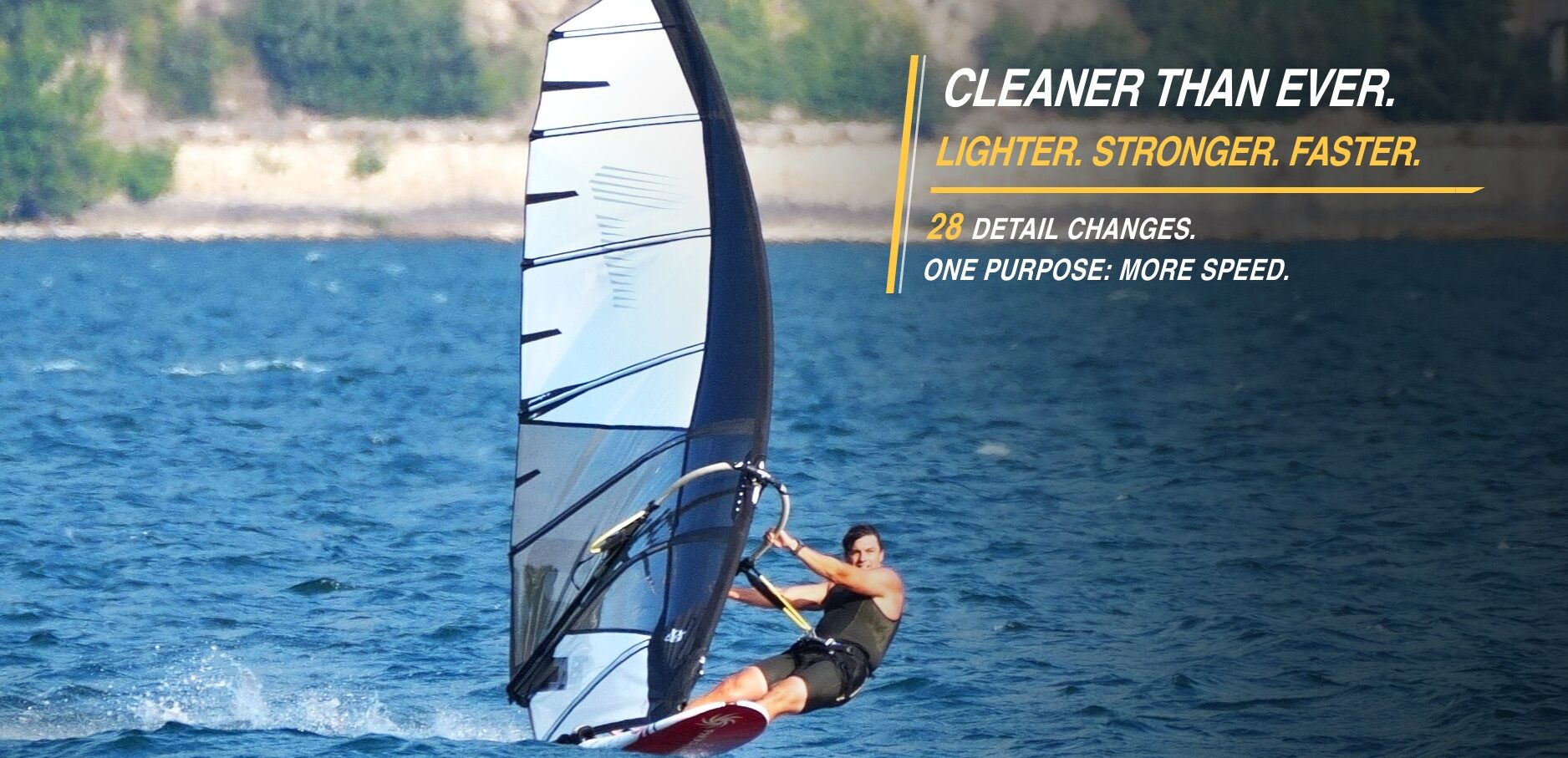
Will a more forgiving setup reduce your top speed?
Not necessarily.
Peak GPS speed is only one number.
A lower-carbon mast, aluminium boom or no-cam sail does not suddenly place a speed limiter on your equipment. The biggest differences are normally found in acceleration, pumping response, recovery after a lull, stability under load, directness and how long you can keep the equipment working at maximum efficiency.
A highly reactive rig can accelerate harder and respond faster. But if that same rig tires you quickly, a slightly more forgiving setup can make you faster over the complete session.
Build the fastest rig for you.
Carbon percentage changes the response
A carbon percentage is not a quality score.
Our masts are made in Italy using the same development philosophy, manufacturing technology and quality standards throughout the range.
What changes most as you move through the range is the response.
A higher-carbon mast recovers from flex faster. This gives the sail quicker acceleration, sharper response and a more direct connection between the wind and the rider.
If budget is not the limiting factor and maximum performance is the target, the highest-performance mast recommended for your sail is the obvious choice.
But more reflex also means more response.
In strong wind, heavy chop or difficult conditions, a slightly more forgiving mast can calm the rig down, reduce physical demand and allow the rider to maintain speed for longer.
This is why even professional riders sometimes use lower-carbon masts when the conditions become difficult.
The three Point-7 mast levels
| RDM | SDM | Character |
|---|---|---|
| K99 | K100 | Maximum reflex, acceleration and performance |
| K91 | K93 | Very high performance with a slightly more forgiving and durable character |
| K71 | K77 | More forgiving response, excellent value and useful for demanding conditions where compatible |
AC-1 mast philosophy
For maximum performance, start with the highest-performance mast specified for the sail. This gives the AC-1 the reflex and acceleration it was developed around.
If you want to calm the rig slightly, moving to the next mast level can give a more forgiving response while keeping the correct Point-7 bend curve.
AC-3 mast philosophy
The AC-3 already reduces some of the physical demand compared with the AC-1.
A K91 or K93 creates a very balanced high-performance combination. Move to K99 or K100 when you want maximum reflex and acceleration.
AC-0 mast philosophy
The AC-0 gives you even more opportunity to tune the character of the complete rig.
A high-carbon mast creates a sharper and more reactive racing feeling. A more forgiving compatible mast can calm the rig further.
On selected AC-0 sizes you also have the possibility of using RDM or SDM. RDM can create a more manageable feeling, while SDM is the more direct performance-oriented option as sail size increases.
AC-1: maximum reflex.
AC-3: balance reflex and comfort.
AC-0: tune the mast according to how aggressive or forgiving you want the rig to feel.
Then move those choices up or down according to your weight, fitness and conditions.

This is where the answer becomes more direct
For maximum performance: Carbon+ Pro.
The boom is your direct connection to the sail. A stiff boom keeps the geometry of the rig stable under load and transfers your input immediately into the sail.
You notice it when pumping, accelerating, loading the fin, exiting a jibe and sailing fully powered.
Carbon+ Pro
Maximum stiffness, response and racing performance.
Our first choice for the AC-1 and the ultimate performance setup for all three AC sails.
C-Carbon 80
A very strong compromise between performance, reflex and price.
For the AC-3 and AC-0 especially, this can create an excellent high-performance combination without going all the way to the full-carbon boom.
ALU+ PRO
The budget option, but also a more forgiving option.
On smaller sails, particularly around 6.5 and below, aluminium becomes more interesting because the shorter boom length reduces the disadvantage in stiffness.
The softer response can also calm the complete rig down. You give away some pumping response and direct acceleration compared with carbon, but that does not mean you cannot go fast.
If the choice is between:
100% mast + aluminium boom
or
90% mast + carbon boom
We would normally choose the 90% mast with the carbon boom, provided the mast is fully compatible with the sail.
Especially when your mast is made in Italy like ours.
Vario lines become a performance tool
These sails have a huge wind range.
Why leave your riding position fixed while the wind changes?
Shorten the lines when the wind drops, when sailing on flatter water or when you want a closer and more powerful connection to the rig.
Lengthen them as the wind increases to create more space between your body and the sail, giving additional control and freedom in chop.
One adjustment can completely change how physical the sail feels.
Your gearbox on the water
If you buy one of these sails without an adjustable outhaul, you are leaving one of its biggest advantages unused.
Release the outhaul and the sail becomes deeper and more powerful.
Pull the outhaul and you flatten the sail for additional control as the wind increases.
The wind can change dramatically during one run. Your sail does not need to stay in the same setting.
Together with Vario harness lines, the adjustable outhaul lets you change the character of the complete rig while sailing.
Carbon or aluminium?
This is probably the component where you should worry least about spending more money for outright speed.
The extension sits at the bottom of the rig, so a weight saving here is less noticeable than reducing weight higher up in the sail.
For racing, aluminium remains an excellent choice. It gives a very direct feeling and is why many performance riders are perfectly happy using an aluminium extension even when the rest of the rig is full carbon.
The Carbon Pro becomes the premium choice when you want to reduce every possible gram and complete the ultimate lightweight rig.
ALU+ Double XXL Pulley
The practical choice when you normally downhaul the sail by hand. The larger pulley system reduces the effort required while rigging.
ALU+ Double Cleat
A useful option if you prefer its guided rope system or regularly use a compatible downhaul winch.
Carbon Pro
The finishing touch when minimum weight and a premium complete setup are the priority.
Boom → Mast → Vario lines / Adjustable outhaul → Carbon extension
Where should you start?
| Component | AC-1 LTD | AC-3 | AC-0 |
|---|---|---|---|
| Sail character | Maximum power and race drive | Race power with less physical demand | No-cam speed and easier handling |
| Mast philosophy | Maximum reflex | Performance / comfort balance | Tune for aggressive or forgiving response |
| Maximum performance boom | Carbon+ Pro | Carbon+ Pro | Carbon+ Pro |
| Balanced boom | C-Carbon 80 | C-Carbon 80 | C-Carbon 80 |
| Aluminium boom | Smaller sizes / more forgiving setup | Smaller sizes / more forgiving setup | Good value and forgiving option, especially smaller sizes |
| Harness lines | AC Vario | AC Vario | Vario |
| Adjustable outhaul | Strongly recommended | Strongly recommended | Strongly recommended |
| Extension | Aluminium is already race-ready | Aluminium or Carbon Pro | Aluminium or Carbon Pro |
The fastest component is the one you can use
There is no single perfect combination for everybody.
A powerful, reactive rig rewards fitness and technique.
A slightly softer rig reduces physical demand and can allow you to keep the board flying efficiently for much longer.
The goal is not to collect the highest carbon percentages possible.
The goal is to create a rig where the sail, mast, boom and tuning systems work together at the level you can exploit.
Not for one GPS peak.
For every acceleration, every gust, every jibe and every run.