
Point-7 equipment guide
HOW TO CHOOSE
YOUR WINDSURFING GEAR.
The right windsurfing equipment starts with the sessions you want to enjoy. Learning your first manoeuvres, blasting across the lake, riding waves, practising freestyle or chasing race speed each asks something different from your rig.
At Point-7, we want to help you put together equipment that suits your sailing, your conditions and your budget. That might mean choosing a complete new rig, finding the right sail for the mast you already own, or upgrading one component.
Start with your sailing goal, choose the sail and size, then match the components around it.


01 / Start here
WHICH POINT-7 SAIL
SUITS YOUR SAILING?
Think about what you want to do most often. Use the table to find your starting point, then open the product page to explore the available sizes and versions.
What are cams? They are fittings that support the sail's profile against the mast. Cammed sails add profile support and use a different rigging sequence. No-cam designs keep that part of the setup simpler.
| Your sailing | Start with | Main focus |
|---|---|---|
| Learning the basics | SKOOL | Learning and first sessions |
| Wave riding | SALTpro | Wave manoeuvres and handling |
| Bump-and-jump and mixed conditions | SPY | All-terrain power and versatility |
| Dedicated freestyle | Slash | Freestyle tricks and manoeuvres |
| Freeride without cams | RUSH-1 | Comfortable no-cam blasting |
| Freeride with cams | RUSH-2 | Two-cam support for blasting |
| Slalom speed without cams | AC-0 | No-cam slalom performance |
| Cammed freeracing | AC-3 | Freeracing with three cams |
| Fin-slalom racing | AC-1 LTD | Dedicated race performance |
| Light-wind fin freeracing | 9+ | A specialised large-sail setup |
| Performance foiling without cams | F0 | No-cam foil performance |
| Foil racing | F1 | Dedicated foil-racing performance |
Mixed conditions
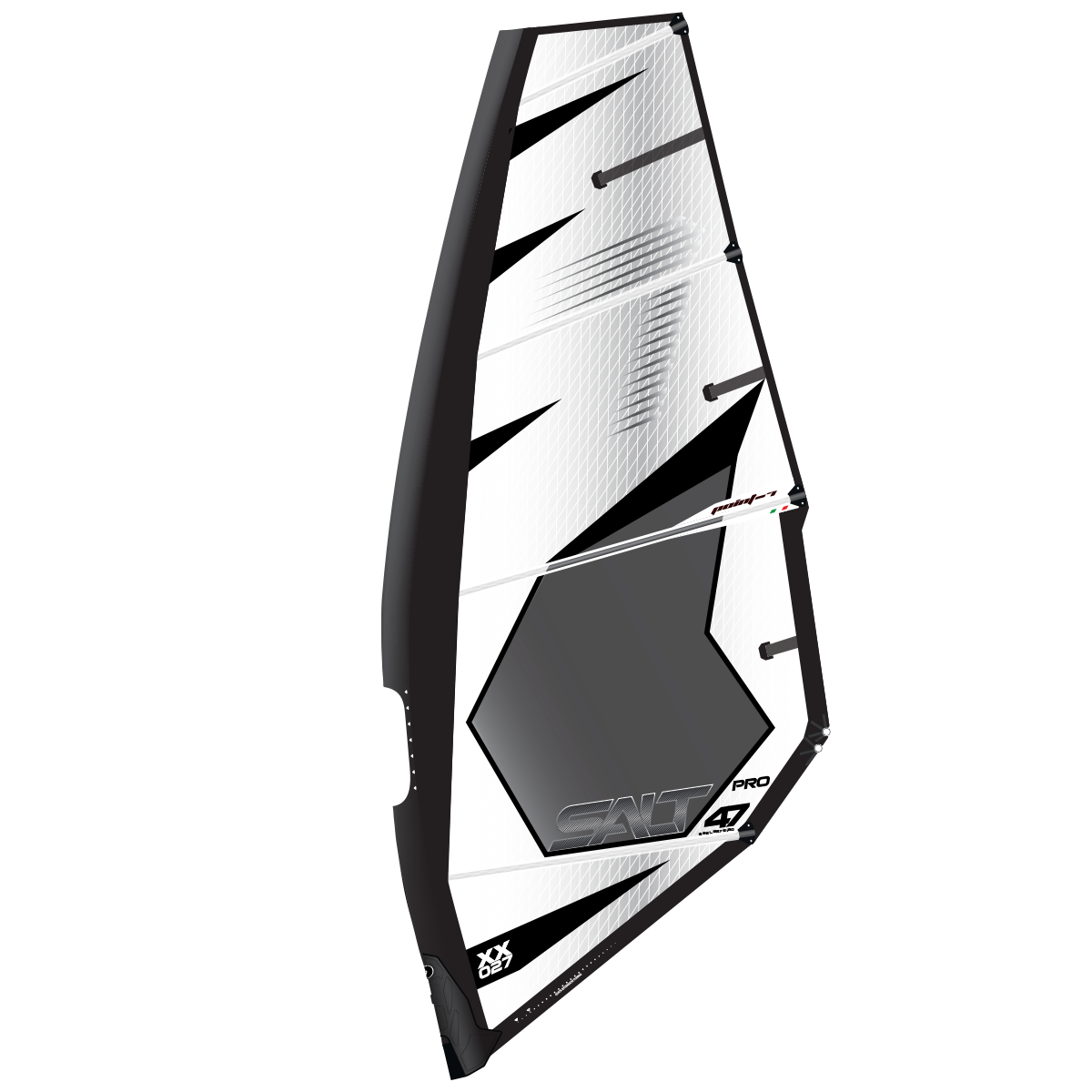
SPY.
Choose SPY if your sessions combine fast reaches, jumps off chop and wave riding. Its five-batten design focuses on early planing, steady drive and control as the wind and water change.
It is a useful starting point for riders on freestyle-wave or wave boards who want a versatile sail for mixed sessions. You might spend one day blasting on choppy water and another riding waves or practising basic freestyle.
Choose SPY when: you want power and versatility across bump-and-jump, blasting and wave sailing.
Explore SPY and choose your size
Pure wave
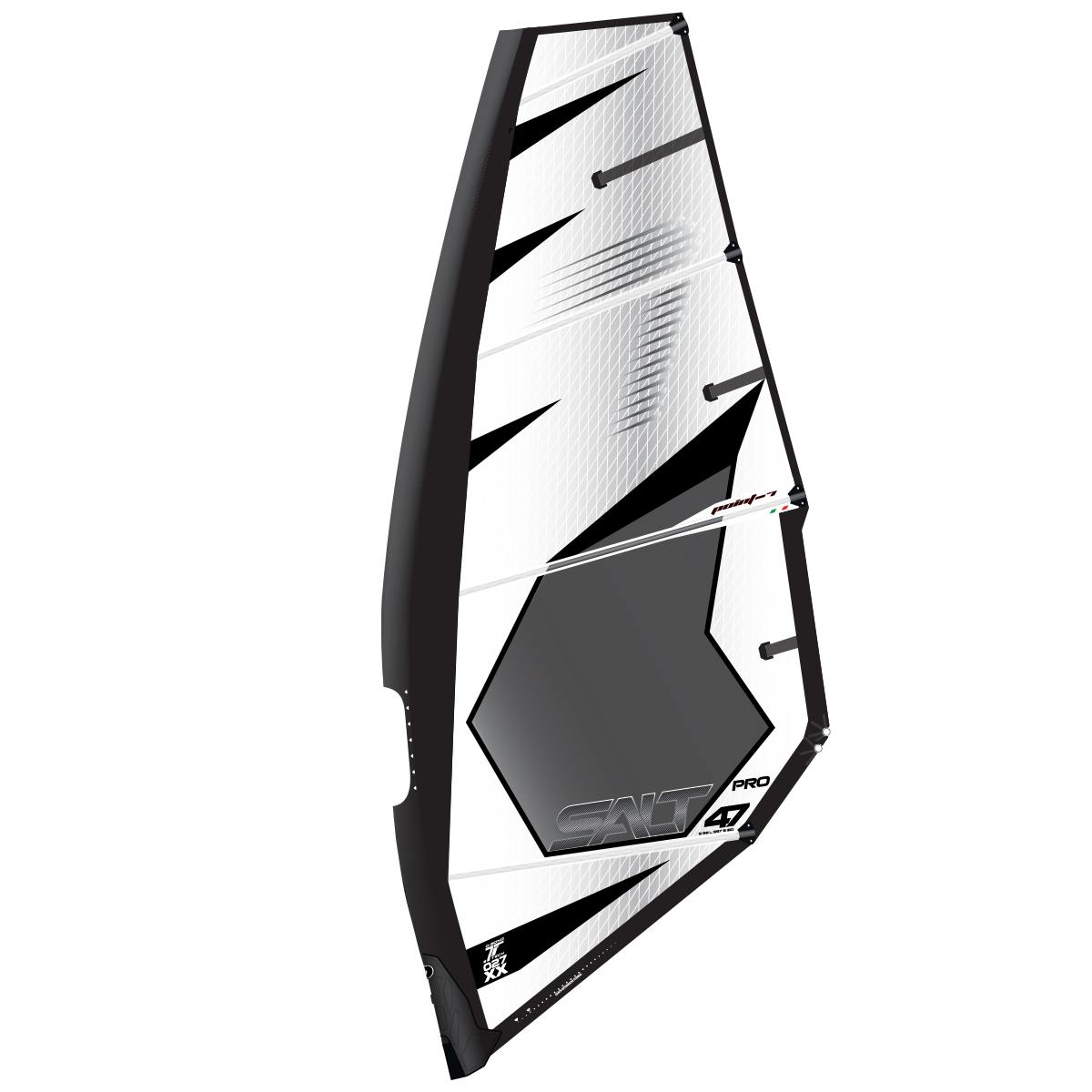
SALTpro.
Choose SALTpro when your main focus is riding waves, linking turns and jumping. Its four-batten wave design combines drive through the bottom turn with a neutral feel when you redirect the rig for the next part of the wave.
Think about what you want to improve: controlling the sail through a turn, moving it freely in a cutback or keeping your attention on the wave. Those are useful reasons to start with SALTpro.
Choose SALTpro when: wave manoeuvres and responsive handling are your priorities. Check the stitched and Q-Bond options available for your chosen size.
Explore SALTpro and its construction options
Freestyle
Slash.
Choose Slash when your main goal is to learn, refine and combine freestyle moves. Its four-batten design focuses on pop, fast rotations and neutral handling while you move the sail through a manoeuvre.
Pop is the lift you generate to launch a move. If your sessions revolve around that take-off, rotating the rig and improving your landings, Slash is the dedicated freestyle choice in our range.
Choose Slash when: technical freestyle progression is the purpose of your session. The current Slash is offered in Q-Bond construction.
Explore Slash and choose your sizeSPY, SALTpro or Slash: how do you decide?
Ask yourself what you want to spend most of your session doing:
- A mix of blasting, jumping and waves: start with SPY.
- Riding waves and linking wave manoeuvres: start with SALTpro.
- Practising dedicated freestyle moves: start with Slash.
These are starting points for choosing. If your sailing sits between two of them, tell us which board you use, what your usual conditions are and what you most want to improve.
RUSH-1, RUSH-2 or AC-0?
If your ideal session is comfortable freeride blasting, start with the Rush family. RUSH-1 gives you the no-cam option. RUSH-2 adds two cams to support the sail's profile while keeping its focus on accessible freeride sailing.
If your main priority is slalom-oriented speed with no cams, look at AC-0. The useful question is how you want the sail to feel and what you want to do with it.
AC-3 or AC-1 LTD?
AC-3 is the freeracing choice for riders who want cam-supported performance with more accessible handling than a dedicated full-race design. AC-1 LTD is the choice when fin-racing performance is your main priority and you want to build your setup around that goal.
Consider your board, experience and the length and intensity of your usual sessions when choosing between them.
Can one sail cover fin and foil?
If you want to use one sail for both, tell us which discipline comes first, the board and foil you use, and the wind range you want to cover. We can help you assess the compromise for your equipment.
If you are learning to foil, ask us about the complete setup before choosing a performance foil sail.
02 / Sail size
HOW DO YOU CHOOSE
THE RIGHT SAIL SIZE?
Once you have found the right sail family, choose a size around your conditions and equipment. Wind strength is one part of that decision.
First, decide which conditions you want to cover. If you are replacing a size that already works well, use it as your starting point. If you are filling a gap, note the sizes on either side. Check your board manufacturer's recommended sail range and, for foiling, the guidance for your foil setup. Then compare the available Point-7 sizes within those requirements.
To help you choose, we need to understand:
- Your weight and ability: tell us what you can comfortably do on the water.
- Your usual wind: include the normal range and the gusts, with the units you use.
- Your sailing spot: flat water, chop and waves create different demands.
- Your board and foil: share the model, volume and width if known, plus your foil setup where relevant.
- Your current sails: are you replacing a favourite size, filling a gap or starting a new quiver?
FIND YOUR SAIL SIZE.
Choose the sail model, rider weight and wind range. The guide shows the Point-7 sail-size, board-volume and fin recommendation published for that combination.
Recommended setup
Use this as a starting point. Board shape, fin or foil, water state, ability, gustiness and personal preference can all influence the final sail size.
AC-1 LTD SIZE GUIDE
Compare every published rider-weight and wind combination for the selected sail.
Size guidance is based on the tables published on the individual Point-7 model pages.
Tell us what you want the new sail to improve. More enjoyable light-wind sessions, better control when powered and easier manoeuvres are different goals. That information helps us give advice that fits your sailing.
Where a sail offers more than one construction, compare the versions available for your chosen model and size. Look at their characteristics and price, and ask us where the difference is most likely to matter for you.
Get help choosing your sail and size03 / Before buying everything
CAN YOU KEEP THE
EQUIPMENT YOU ALREADY OWN?
Start by checking what you have. A new sail does not automatically mean replacing every rig component.
For a mast or a complete rig check, send us the exact sail model, version and size, together with the mast's brand, model, year, length and diameter. For your boom and extension, include the model and adjustment range.
If a label is unclear, a photograph is a useful starting point. This also helps when you own an older Point-7 sail or equipment from another brand.
We can then help you identify what suits the new setup, what needs checking and where a replacement or upgrade would be useful.
04 / The mast
WHICH MAST
SHOULD YOU CHOOSE?
Match the mast to the sail before choosing the carbon percentage. Length, diameter, stiffness and bend characteristics all matter to the fit.
RDM or SDM?
RDM means reduced-diameter mast. SDM means standard-diameter mast. Use the type specified for your exact sail model and size. Different sizes within a sail family can have different requirements.
The recommendation on the product page is your starting point. If you want to reuse a mast and are unsure about the match, ask us before buying the remaining components.
How much carbon do you need?
Our masts are made in Italy. Within the compatible options, choose the response and budget that suit your sailing. Higher-carbon options offer quicker reflex, which can be useful when pumping and accelerating; a more forgiving response can suit relaxed blasting.
For a Rush setup, K71 RDM or K77 SDM can be sensible choices where they match the exact sail's requirements. Choose higher carbon when its response supports the way you sail.
For SPY, SALTpro and Slash, start from the mast recommendation for your exact model and size. Tell us whether you mainly jump, ride waves or practise freestyle, so we can help you choose among compatible options according to the response you want and your budget.
05 / Your connection to the rig
WHICH BOOM
SUITS YOUR RIG?
First, check that the boom's adjustment range covers the settings your sail needs. Then check that the boom head fits your mast, including the correct adapter where required.
Once the fit is right, compare construction, grip, shape and price.
- ALU+ PRO: a practical option for relaxed Rush blasting and recreational sailing where the sail's requirements allow it.
- C-CARBON 80: consider it when you want a stiffer, more direct response for active pumping and powered sailing.
- CARBON+ PRO: explore the full-carbon range when response and performance are priorities, choosing the size and shape that suit your discipline.
A boom upgrade should have a clear purpose for your sailing. Compare the actual specification of the size you need, including weight and adjustment range, alongside the feel you want.
For a SPY, SALTpro or Slash rig, also consider how comfortable the grip feels when moving the sail through turns, jumps or freestyle manoeuvres. Use the sail's size-specific boom recommendation, then compare suitable options for grip, shape, weight and price.
For a dedicated racing or foil rig, follow the component requirements for that sail before applying general freeride advice.


06 / Extension & base
COMPLETE THE
CONNECTION.
Your extension needs to fit the mast diameter and provide the setting specified for your sail. Check the usable adjustment range and the connection to your base.
Aluminium or carbon? Aluminium is a practical everyday choice. Consider Carbon Pro when reducing rig weight is a priority, comparing the actual weight, adjustment range and price of the compatible options.
Within our aluminium range, choose the downhaul system you prefer:
- ALU+ Double XXL Pulley: a practical option for downhauling by hand.
- ALU+ Double Cleat: an option when you prefer to use a compatible downhaul winch.
Follow the rigging guidance for the correct downhaul setting. If you are keeping an existing extension, check its range and connection before adding it to your new setup.
The base completes the connection between rig and board. If you are building a complete rig, include a suitable base or confirm that your existing one matches the extension. Explore PRO BASE 2.0 and ask us if you need help checking the connection.
07 / Harness lines
FIXED OR
ADJUSTABLE?
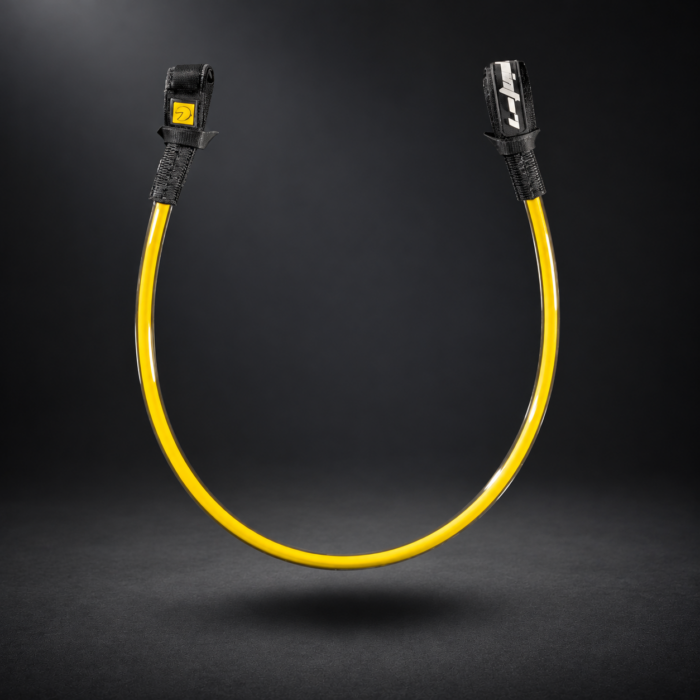
Fixed lines suit riders who have a comfortable length and like to keep it consistent. Vario lines let you adjust the length while sailing.
The right length depends on your stance, harness type, boom height and proportions. If you already have a setup that feels comfortable, tell us its length. If you are unsure, we can help you choose a starting point and explain how to fine-tune it.
If a quick-release feature matters to you, compare the QR fixed and QRV adjustable options. Choose fixed or adjustable length first, then the features you want.
08 / Before ordering
CHECK
YOUR SETUP.
Make a short list of what you are buying and what you are keeping.
The sail model, size and construction are the versions you want.
The mast and extension suit that exact sail.
The boom has the required range and fits the mast.
The base and extension connections match.
You have suitable lines, ropes, an uphaul where needed and any specified outhaul arrangement.
If you need an uphaul, see our padded uphaul . Keep optional upgrades separate from the items you need to complete the rig, so you can spend according to your priorities.
For a Rush setup, you can also follow our more detailed Rush Blasters Rig Components Guide .
Delivery
Shipping & availability.
Check the product page for the availability of your chosen size and version. For delivery information and costs to your country, visit Shipping & Costs . If your destination or order needs a separate quote, contact us.
Payment
Choose how to pay.
See Payment & Warranty for payment information and use the options available for your order. Contact Point-7 if you prefer to arrange a bank transfer.
WANT US TO HELP
YOU CHOOSE?
Tell us about your sailing and what you would like to improve. The most useful details are your weight, ability, usual wind, board or foil, current sails and the components you want to keep.
Include your budget and any product you are already considering. We can help you work through the choice, whether you need one component or a complete rig.