
Views from outside
TESTED.
NOT BY US.
Independent magazine tests give another perspective on our equipment. Different testers, different conditions and different priorities. One useful way to understand how a sail really behaves outside our own development team.
Magazine test reviews
WHAT DO
MAGAZINES SAY?
Magazine tests can provide valuable feedback when you are considering your next sail. At Point-7, each model is developed around a clear performance target. We normally push that concept as far as possible, whether the objective is wave control, freeride accessibility, no-cam speed or full racing performance.
A magazine may evaluate a sail against a slightly different target. Testers, locations, wind conditions and the audience of each publication can all influence the final verdict. That is why the same sail may receive slightly different comments from one publication to another.
That is exactly why independent tests are interesting. They are views from outside.
Latest test
SALT PRO 025.
THE PRO WAVE.
The 2025 test describes the SALT Pro as a wave sail with a solid, purposeful construction and a forward-focused profile. The sail becomes progressively lighter in the hands as speed increases and is especially comfortable when properly powered.
Its Dacron luff panel softens the delivery, while the stable frame keeps the sail composed through gusts and demanding wave conditions. The magazine particularly appreciated the control available when the sail is used with plenty of wind.
Read the test highlights
Rigging and construction. The test noted a substantial build, a relatively pronounced luff curve and a taut upper leech. Pre-shaping in the battens creates useful draft before the sail is fully powered.
Power delivery. The Dacron luff panel helps create a softer and more progressive feeling, while the forward draft provides useful drive once the sail is powered.
On the water. Windsurf UK found the sail particularly convincing in strong wind. Speed makes the rig feel increasingly neutral, which gives the rider confidence when attacking ramps or riding powered waves.
Who is it for? Riders who enjoy sailing properly powered and who place stability, control and confidence high on their list.
Magazine tests
2024.
AC-0.
NO CAM RACE.
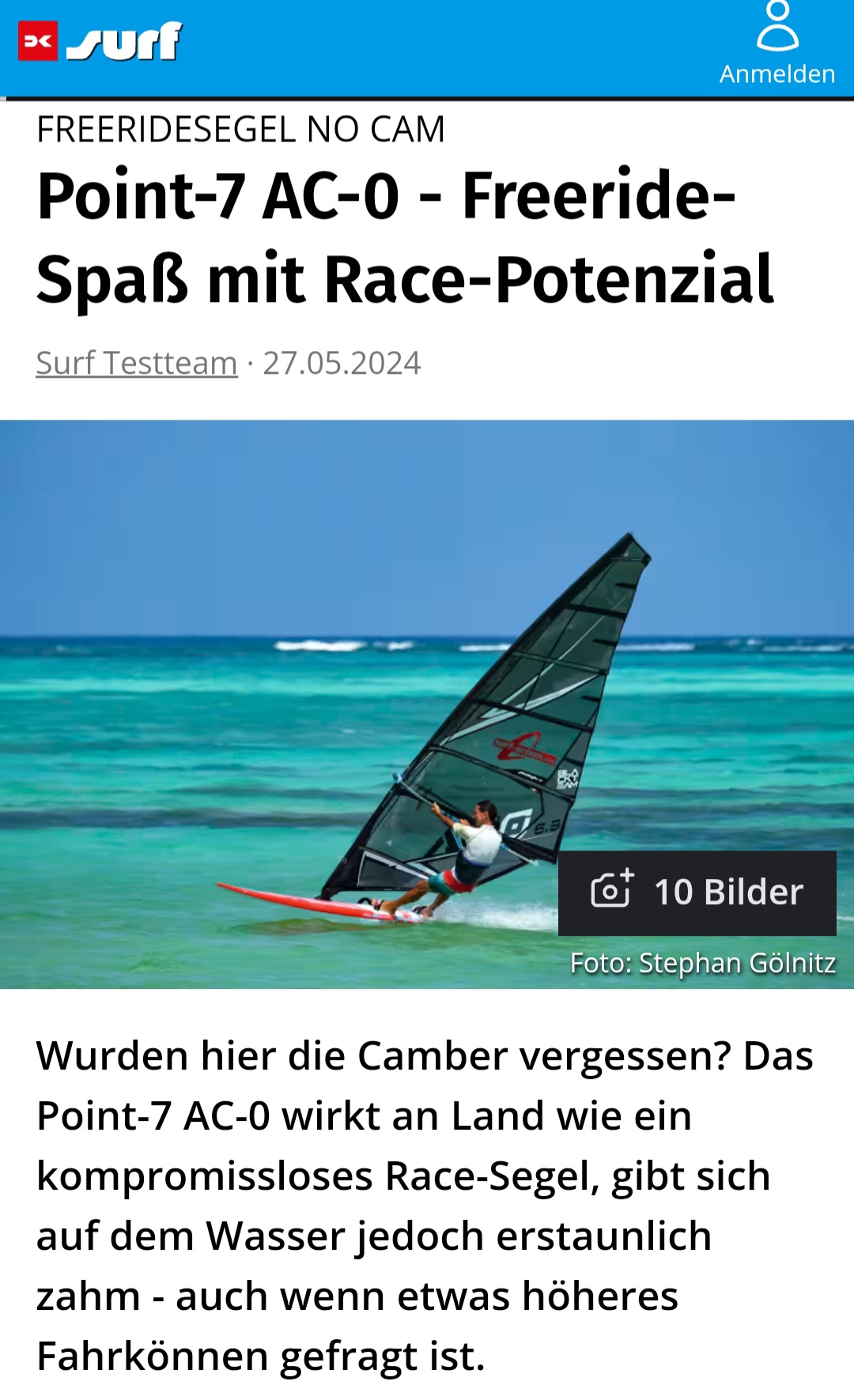
The AC-0 was developed around one clear target: race-sail speed without the wide sleeve and cambers of a traditional slalom sail. The concept combines direct no-cam handling with a locked-in, performance-oriented profile.
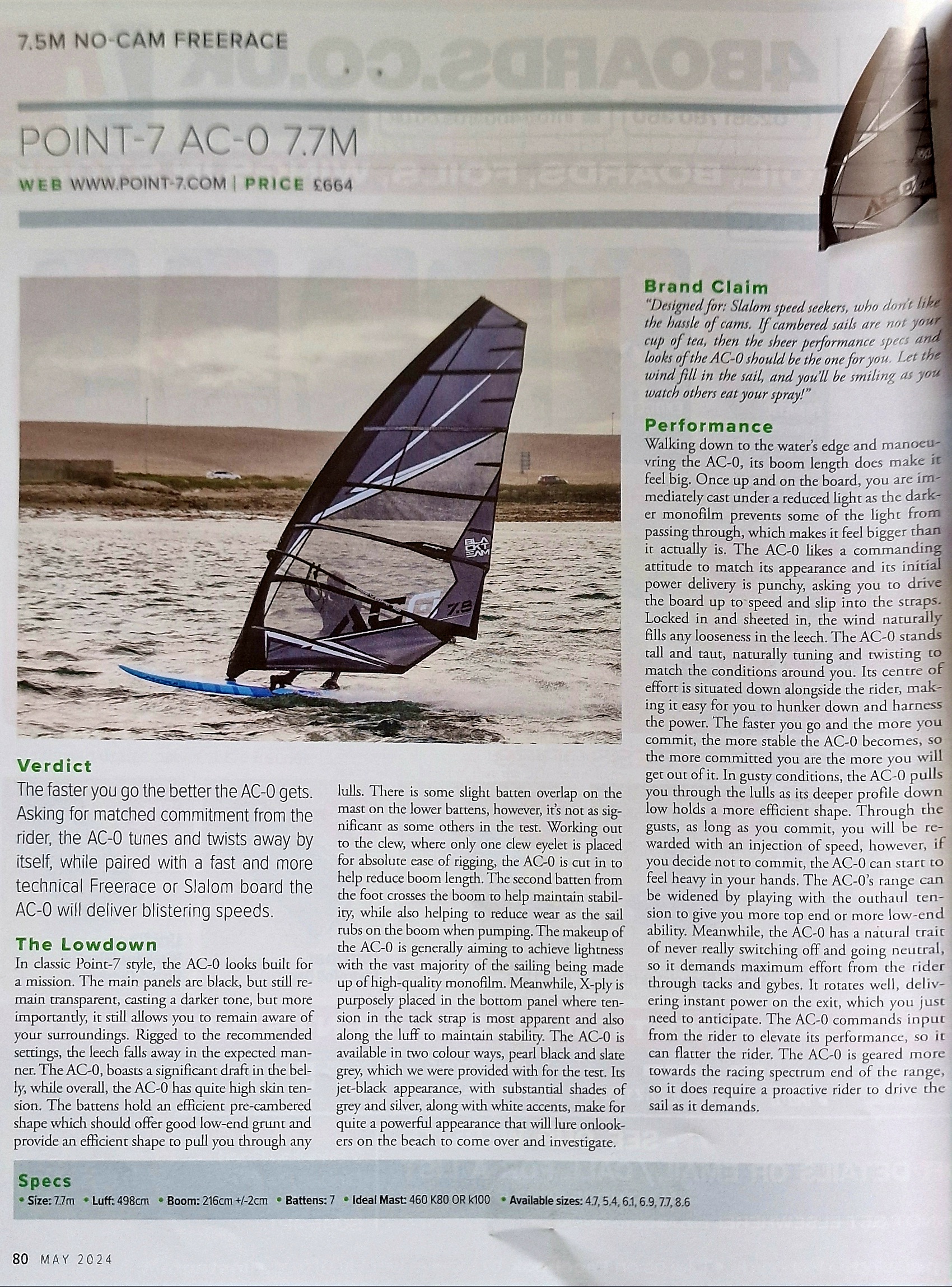
AC-0 7.7.
NO CAM RACE.
The 7.7 follows the same AC-0 philosophy: high-end performance, strong low and high-wind stability and a notably locked-in feeling without the complexity of a cambered race sail.
Its low foot supports a committed stance and the design is aimed at riders who want genuine racing performance from a no-cam rig.

SALT PRO.
PRO WAVE.
The 2024 test highlighted the SALT Pro's controlled power delivery. It supports a composed riding stance, gives drive into critical sections and allows the rider to release the power quickly when manoeuvring on the wave.

AC-F 5.9.
CROSSRIDE.
The AC-F was developed as a crossover sail with an emphasis on accessible performance and light-wind power. The concept was to deliver useful drive from a relatively small sail while retaining easy manoeuvrability and an uncomplicated no-cam setup.
Featured accessory
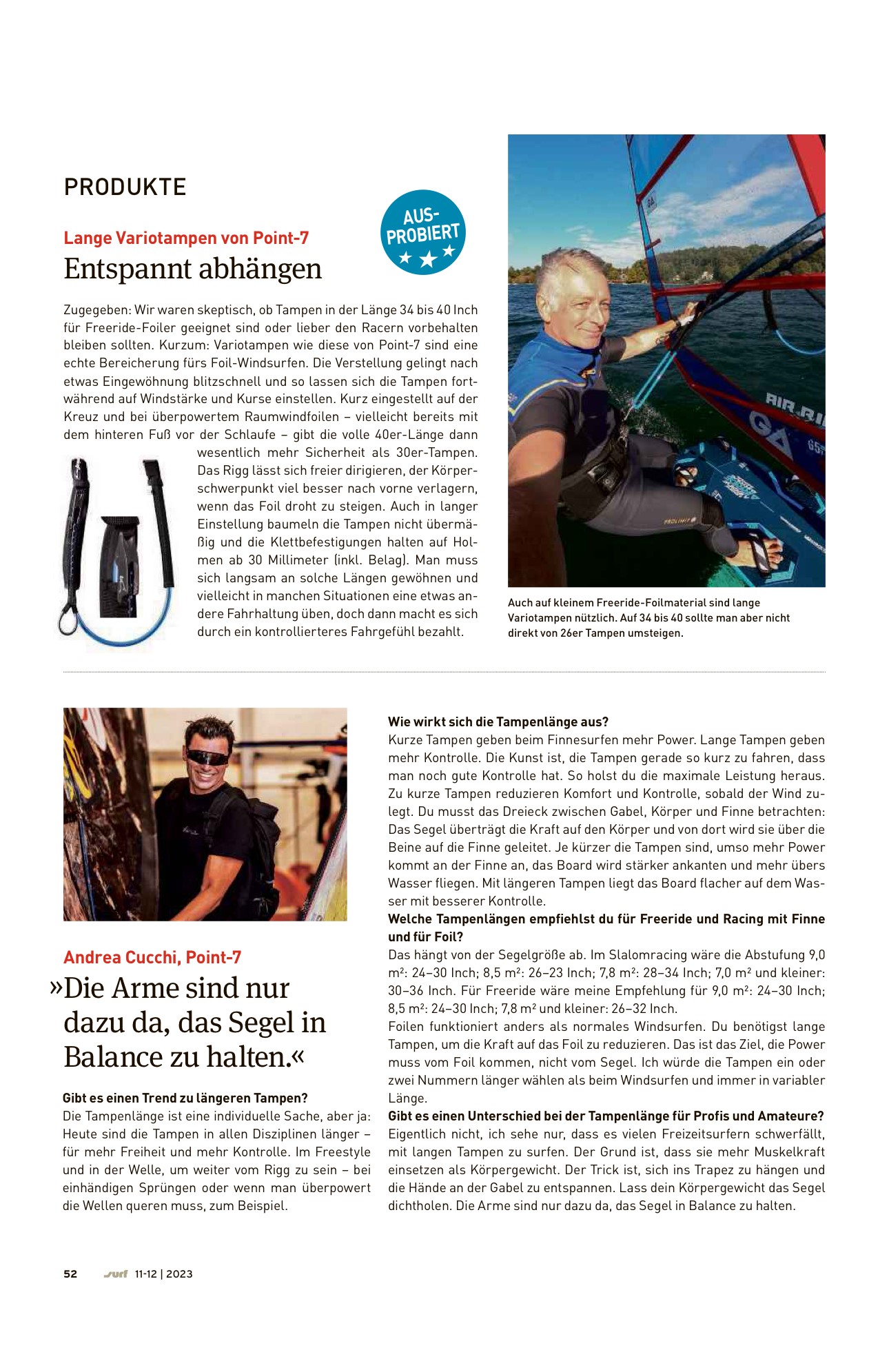
AF VARIO
HARNESS LINES.
Non-twisting adjustable harness lines developed for both fin and foil. A practical solution for riders who regularly change stance, boom height or sailing discipline.
Original clamp-cleat system with a wide adjustment loop.
Designed to reduce unwanted swinging even when extended.
Multiple lengths for different sailing styles and setups.
Test archive
2023.

SPY.
POWER WAVE.
Surf Magazin tested the SPY as a versatile wave and bump-and-jump sail. The concept prioritised control and wind range, making it suitable for everything from powered coastal blasting to pure wave riding.

AC-Z.
2-CAM RACING.
Surf Magazin found the AC-Z particularly fast and controllable. The sail required meaningful downhaul tension, but that tension helped create the stable, locked profile expected from a performance-oriented slalom sail.
On the water, the concept combined race-sail stability with easier waterstarting and uphauling than a full race sleeve.

AC-X.
NO CAM RACING.
The AC-X test centred on a simple question: how much racing speed really requires cambers? The no-cam concept was aimed at sailors wanting speed for long-distance and local racing without moving into a full cambered rig.

SPY.
POWER WAVE.
Windsurf UK viewed the SPY as a highly practical coastal wave sail. Its combination of speed, power and stability made it equally relevant for gusty wave conditions, bump-and-jump sessions and high-wind freeriding.

AC-Z.
2-CAM RACING.
Windsurf UK highlighted the AC-Z's stability, strong acceleration and ability to keep carrying lift and speed when the wind dropped. Through the turns, the sail rewarded confident handling and delivered powerful exits.
5.9
AC-F.
CROSSOVER.
Windsurf UK described the AC-F as a combination of accessible freeride handling and a noticeably performance-oriented character. The sail produced strong low-end drive, rapid acceleration and useful manoeuvrability through aggressive gybes.
Read the full test summary
Concept. The AC-F was aimed at progressing freeriders rather than pure beginners. The idea was to offer enough ease and comfort to build confidence while retaining a more exciting, performance-focused feeling.
Construction. The 2023 model used anti-UV materials, a reinforced X-Ply base, tubular battens and a Dacron luff panel to balance durability, responsiveness and softer power delivery.
Rigging. The test noted a moderate luff curve and a visual rigging guide. The sail could be used on RDM or SDM masts, with SDM providing the recommended performance option in the larger sizes.
Performance. Windsurf UK highlighted the sail's initial acceleration and the way this power became smoother as speed increased. Its manoeuvrability also encouraged riders to explore more committed gybes and more active sailing.
Archive note: these tests refer to earlier Point-7 model generations. Their reviews remain useful for understanding the development history and design philosophy behind today's range. For current construction, sizes and specifications, use the latest product pages.
NOW CHOOSE YOUR GEAR.
Compare the current range using the Point-7 Buyer’s Guide.