
THE DETAILS BEHIND INNOVATION, QUALITY AND PERFORMANCE.
Explore the construction details behind Point-7 Zero27 sails, from materials and panel architecture to battens, reinforcements, rigging references and profile-control systems.
WAVE | FREESTYLE | BLASTERS
WAVE | FREESTYLE | BLASTERS

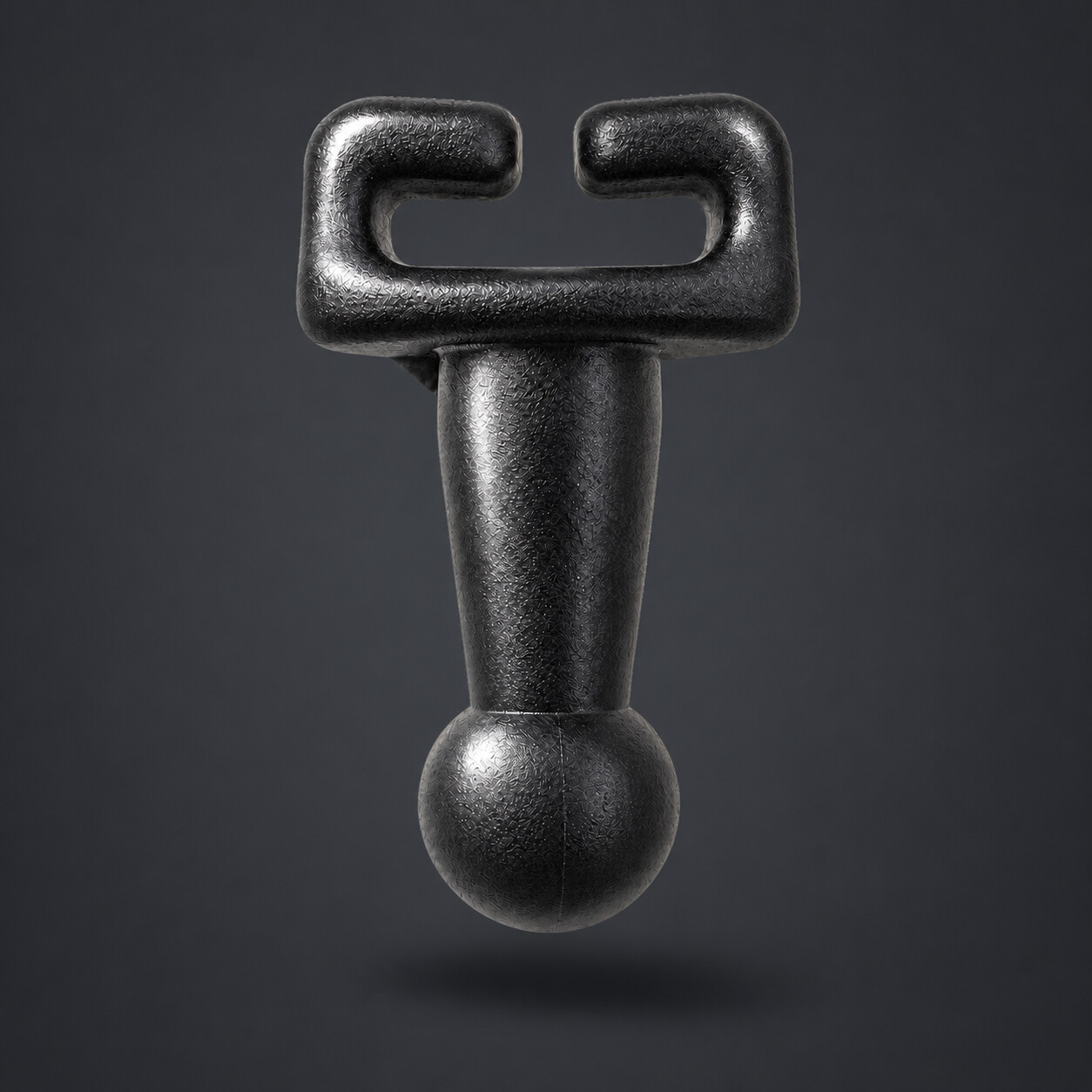
AIM™ AUTO INSERT MAST
Integrated sphere pin for fast automatic mast insertion.
Faster rigging • Less snagging • Easier mast insertion. Safer.
TECHNICAL EXPLANATION
AIM guides the mast naturally over the sail pin in the luff sleeve during rigging.Integrated sphere pin for fast automatic mast insertion.
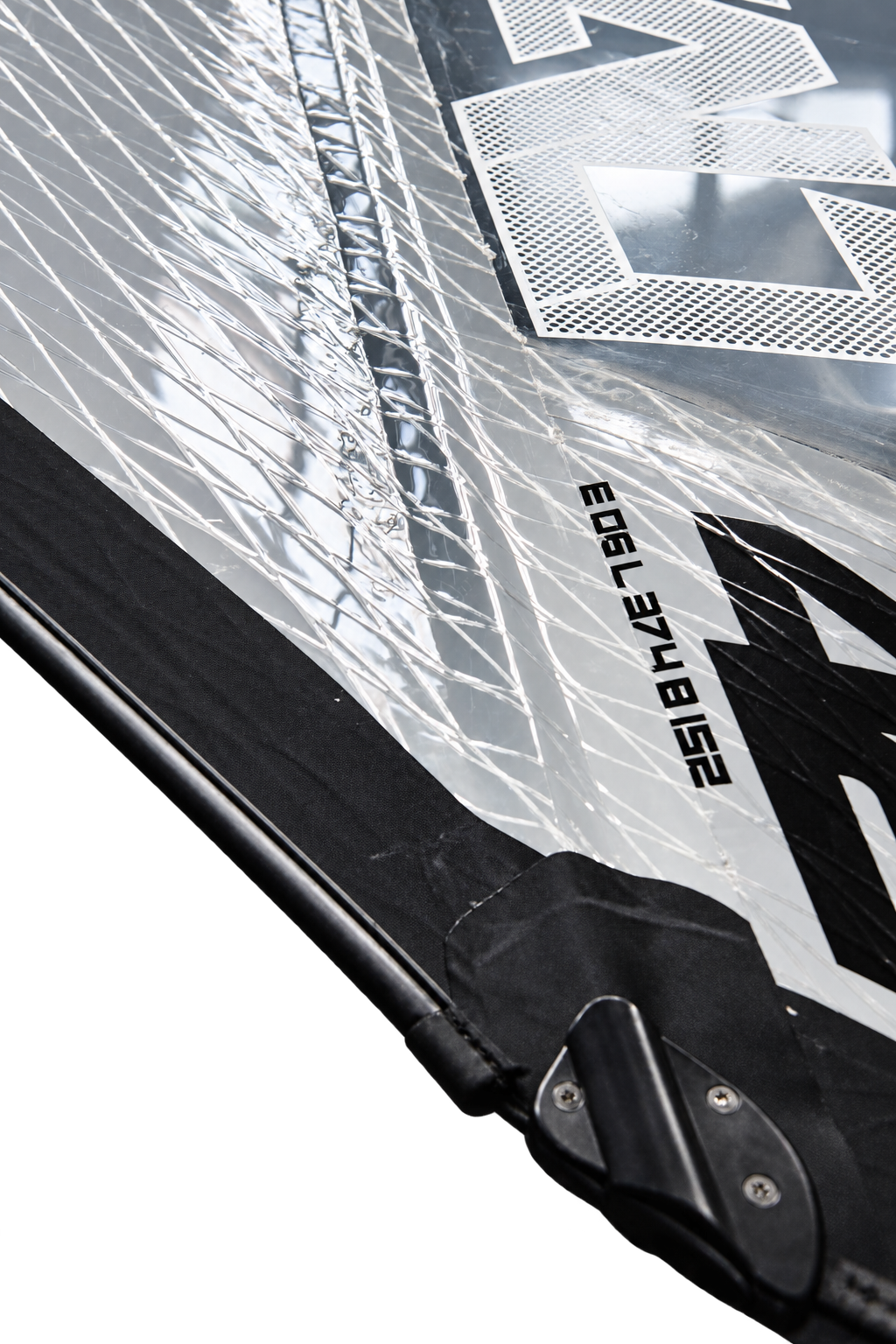
(QBOND VERSION) Q-BOND™ ULTRASONIC FUSION

Ultrasonically fused structural panels.The Whole sail body is not stitched.
Lower weight • Cleaner aerodynamics • Faster reflex • More precise load transfer • Reduced seam bulk. 30% less swing weight.
TECHNICAL EXPLANATION
Q-BOND replaces traditional stitched panel joining with controlled ultrasonic fusion in the full sail body. Only the mast sleeve is stitched to the sail body. The process creates a clean, continuous bond with less thread, less seam bulk from reinforcements, and more direct material-to-material load transfer.
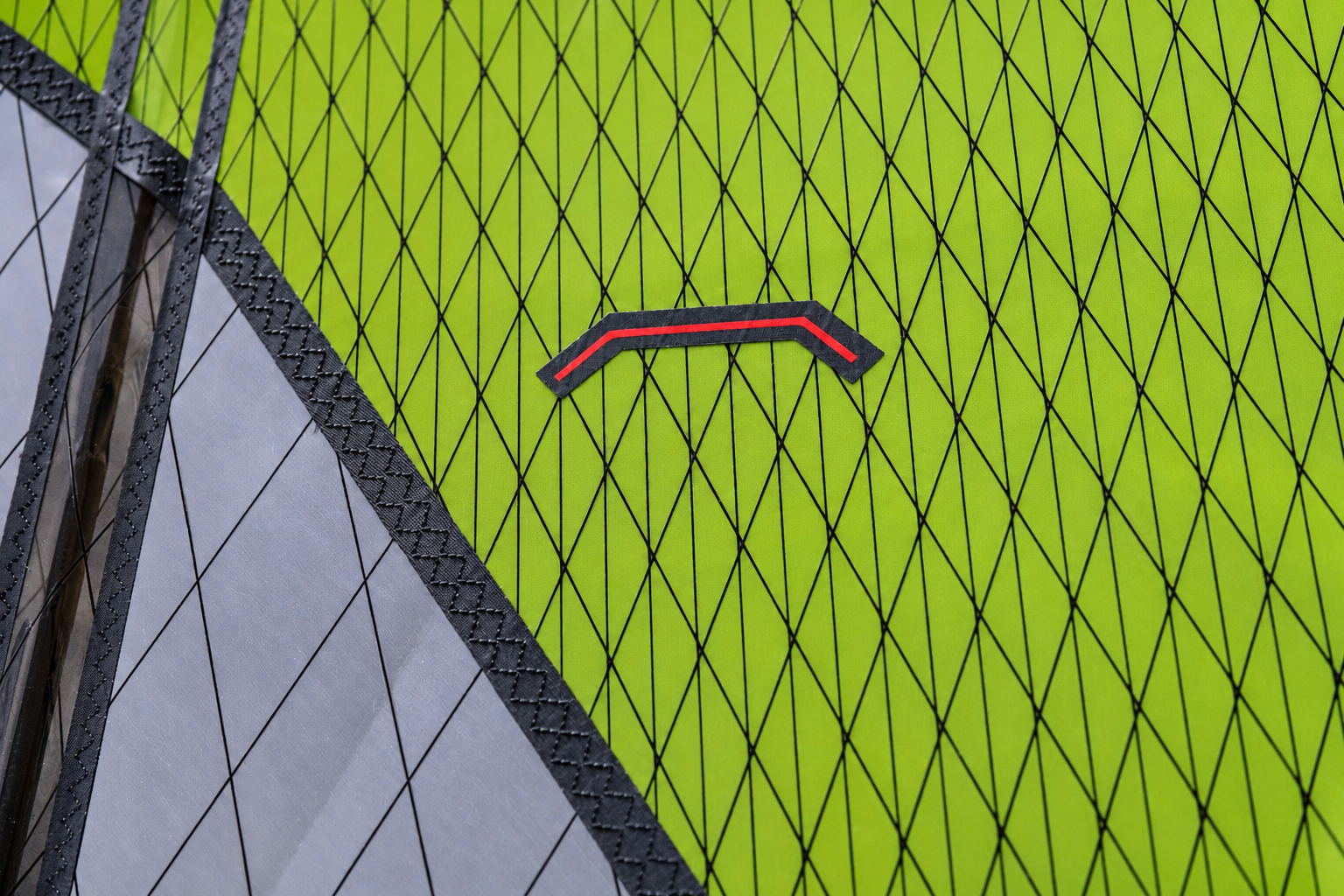
(ON STITCHED VERSION) DTSP 25™ DOUBLE TRI-STITCH 25 MM PANELS
Double tri-stitching across a 25 mm structural seam connection
Higher seam strength • Better load distribution • Increased durability • Stable panel alignment. Cuts don’t travel across the different panels limiting damage.
TECHNICAL EXPLANATION
Two rows of triangular stitching secure a wide 25 mm panel overlap. The stitch geometry spreads loads over a larger area and resists seam opening under repeated high tension.
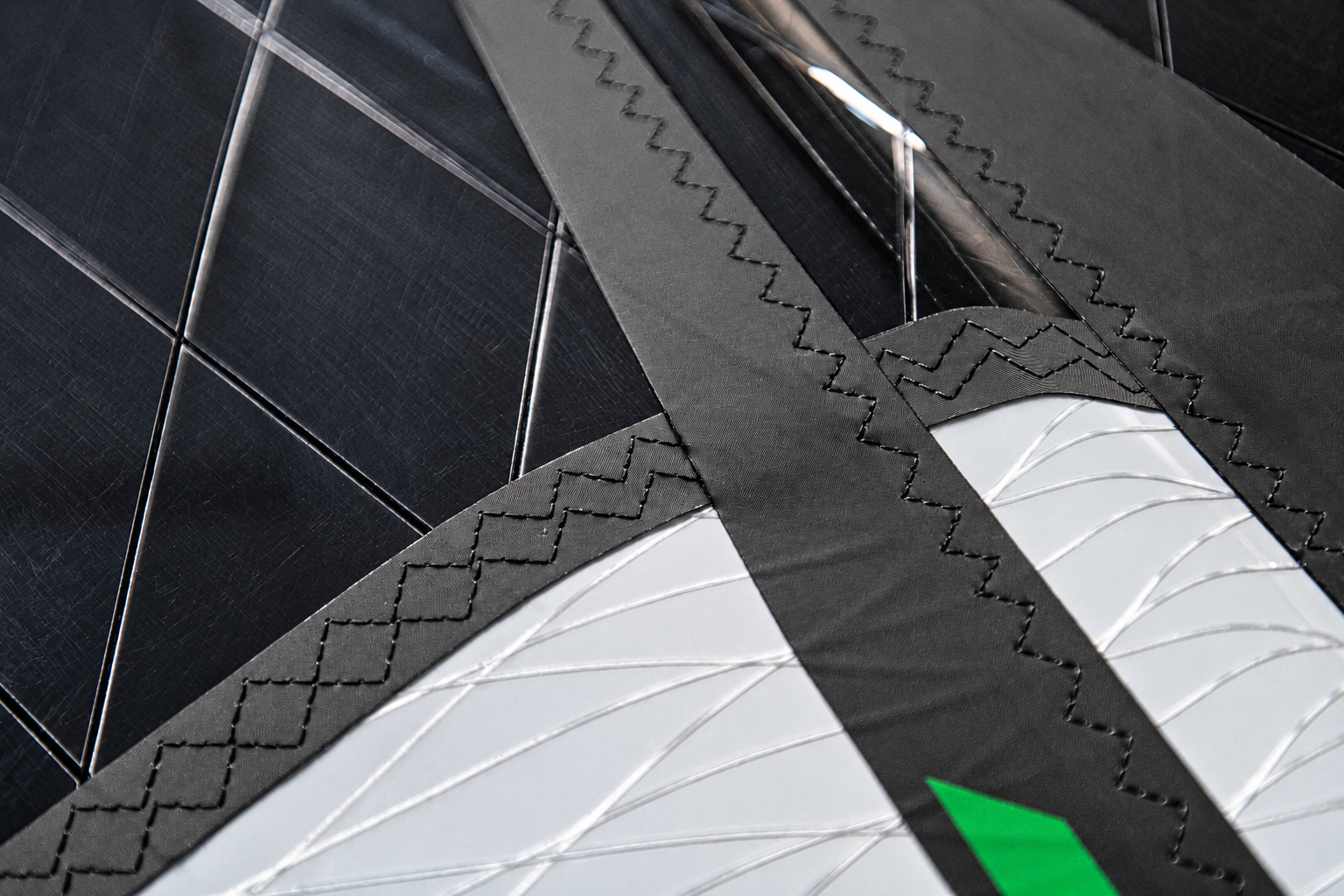
OP™ OVERLAPPING PANEL CONSTRUCTION™

Wide structural overlaps distribute sail loads and takes out batten sleeve pockets
Better load distribution • Stronger structure • Stable profile • Improved durability. Less stitching. Less weight.
TECHNICAL EXPLANATION
Major body panels overlap across carefully defined load zones instead of meeting only at a narrow seam. The larger bonded or stitched contact area spreads tension progressively through the sail body and supports long-term shape stability.
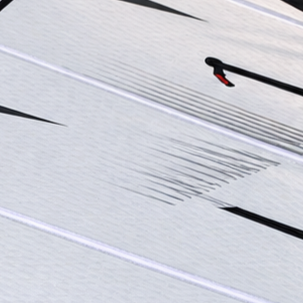
RSC™ REDUCED-SEAM CONSTRUCTION

Fewer structural seams for a cleaner sail body.
Lower weight • Cleaner surface • More uniform flex • Reduced seam drag
TECHNICAL EXPLANATION
Panel layout is engineered to reduce the number of seams needed to build the designed shape. Every removed seam eliminates thread, local stiffness and unnecessary construction weight while keeping the required structural support
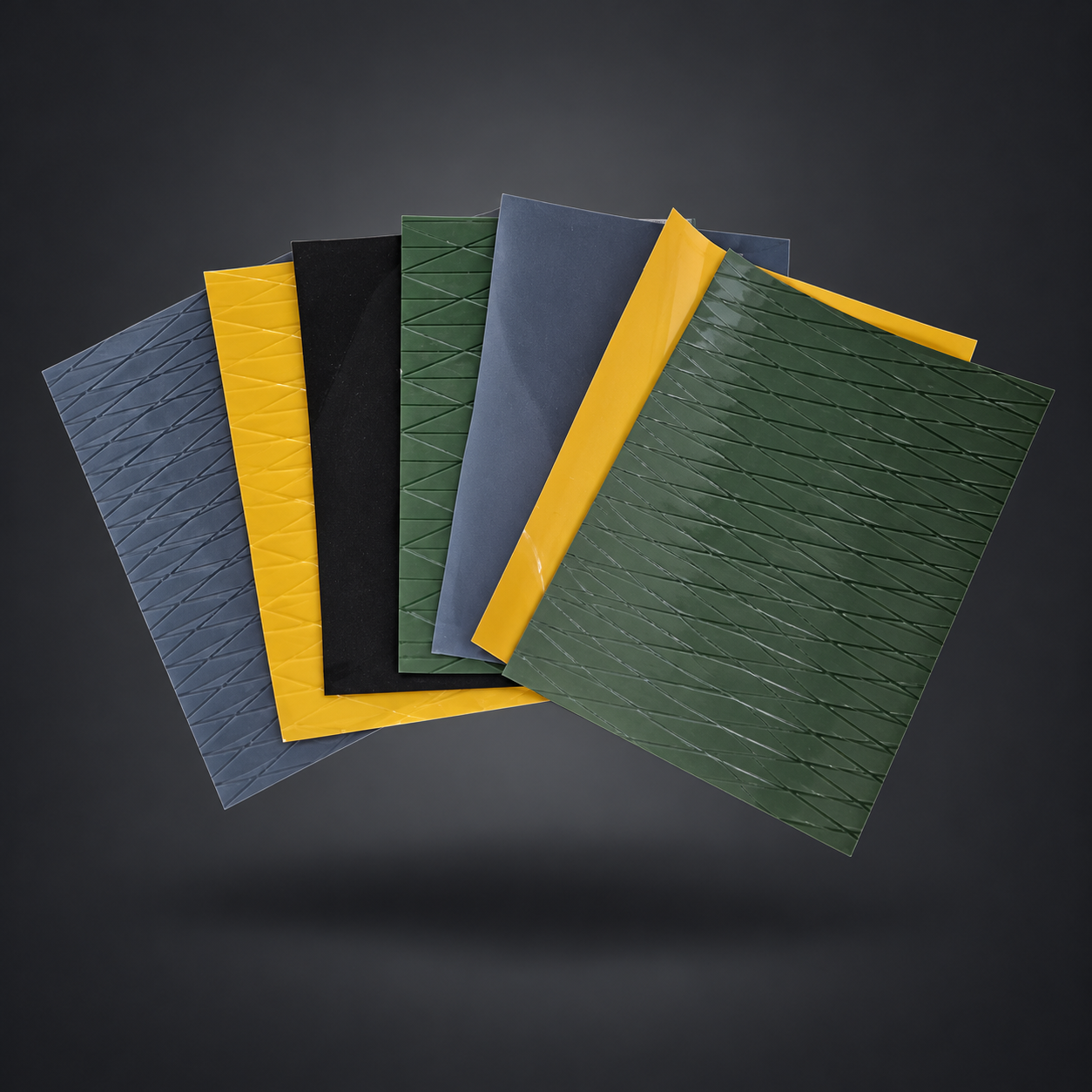
UV-SHIELD™ 100% UV-SHIELD™ LAMINATE
 UV-resistant laminate throughout the specified sail areas.
Longer material life • Better appearance retention • Stable performance • Reduced UV ageing
TECHNICAL EXPLANATION
UV-SHIELD laminate uses a multi-layer film structure selected to reduce degradation from prolonged sun exposure while maintaining the transparency, stiffness and structural response required by the sail design. These materials can be crashed, squeezed, pinched but will flatten out without craking, unlike transparent monofilm. The reason of 10x the price.
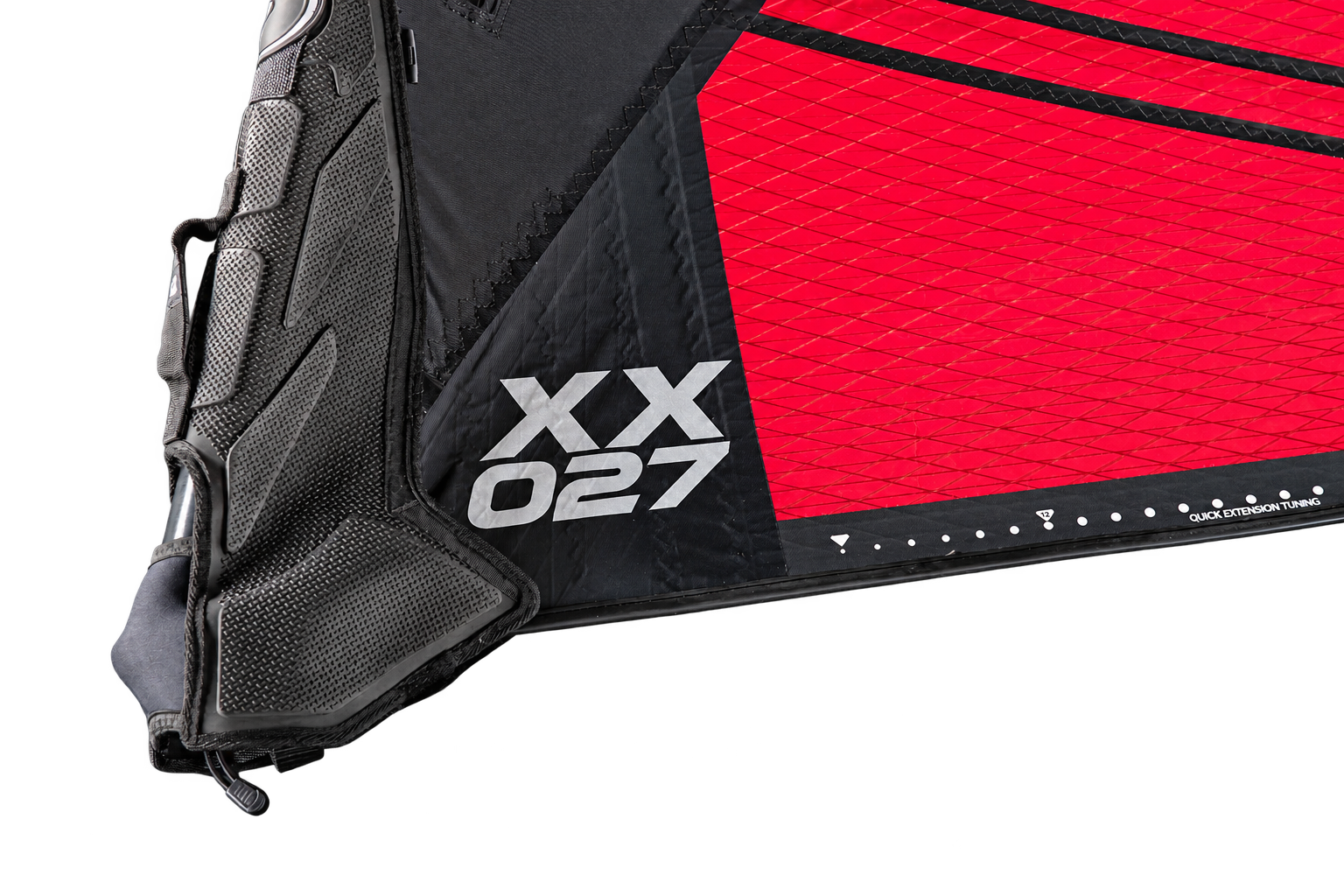
5MIL™ BASE 5MIL IMPACT X-PLY

Heavy-duty 5 mil X-Ply in high-impact base zones.
Higher impact resistance • Better puncture protection • Stronger lower sail • Longer service life. No Stitching on base panel with full Kevlar reinforcements for stronger hold in body & hook crashes.
TECHNICAL EXPLANATION
A thicker 5 mil X-Ply is used in the lower sail where impacts, board contact and rigging abuse are most likely. The reinforced film and fibre grid increase puncture and tear resistance where it matters most. While the higher panels range from 3.5 to 4mil to decrease weight.
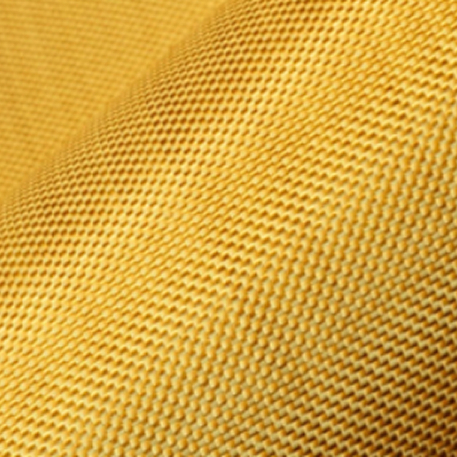
KLR™ KEVLAR LOAD REINFORCEMENT
Aramid reinforcement in critical high-load zones. High tensile strength • Better tear resistance • Localised reinforcement • Low weight
TECHNICAL EXPLANATION
Kevlar reinforcement is placed where concentrated loads and repeated flex can damage conventional laminate. Its high tensile strength supports the surrounding panel structure without requiring large heavy patches.If you see some yellow light fluff in some areas, you know what is hiding under.
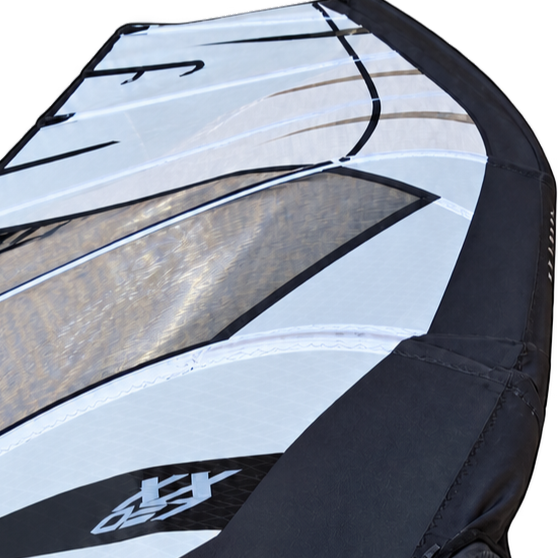
CLS™ CONTINUOUS LUFF SLEEVE

One piece mast sleeve.
Cleaner leading edge • Consistent mast alignment • Smooth load transfer • Stable profile. Lighert and reactive.
TECHNICAL EXPLANATION
The luff sleeve is built as a continuous structural element to maintain alignment along the mast, reduce discontinuities and give the front of the sail a smooth, controlled relationship with mast bend.
DLP™ DYNAMIC LUFF PANEL

Dacron transition panel between mast sleeve and sail body.
Chop absorption • Smoother power delivery • Cleaner profile transition • More comfort • Better control
TECHNICAL EXPLANATION
A premium Dacron luff panel creates a progressive flex zone between the comparatively rigid mast sleeve and the sail body. The material absorbs sharp chop-induced loads and allows the profile to settle naturally instead of transmitting every shock directly into the foil.
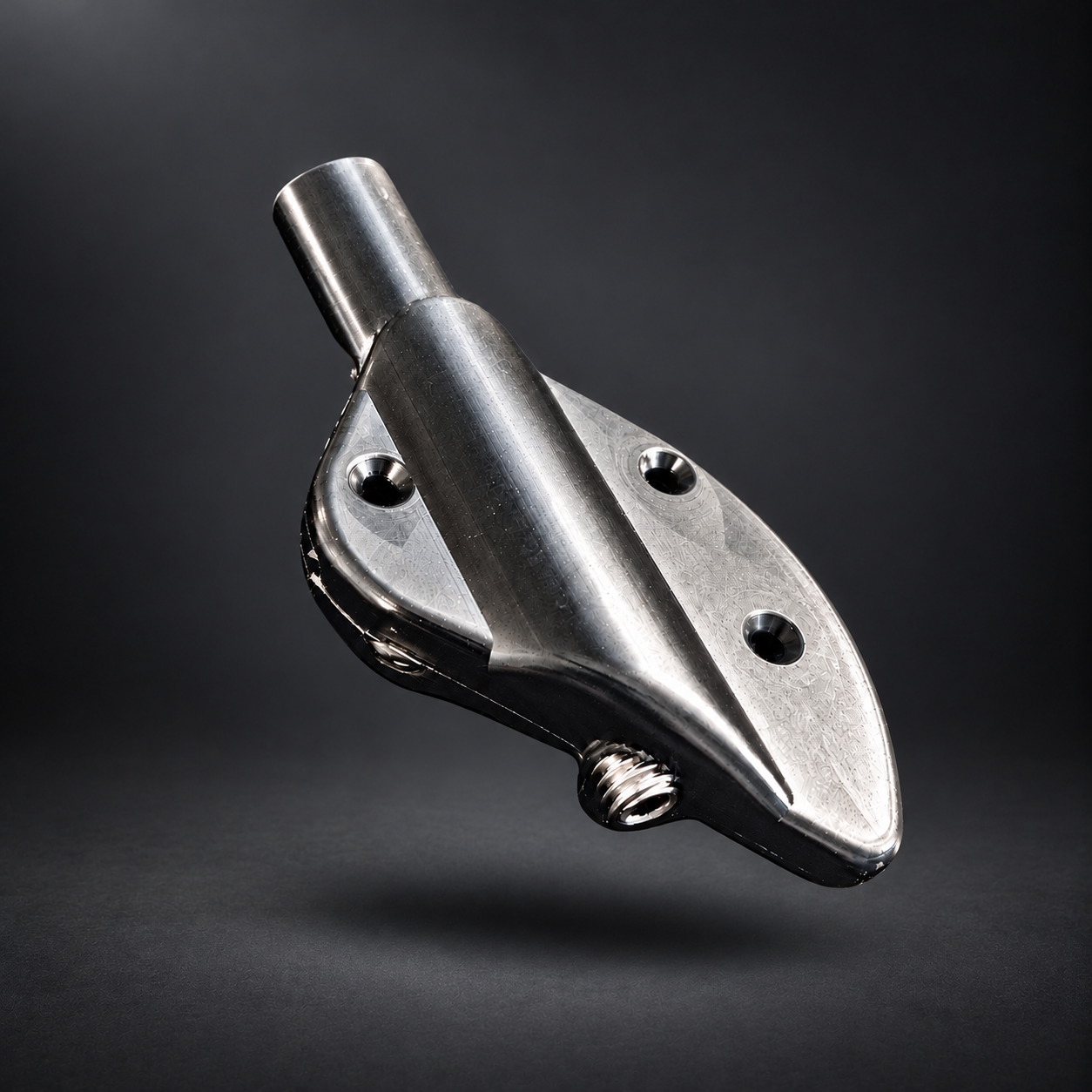
SBT™ SYMMETRIC BATTEN TENSIONER

Balanced batten loading from both sides
Cleaner profile • More precise tuning • Better stability • Consistent reflex. Easier to repair
TECHNICAL EXPLANATION
The SBTis designed so tension the structure symmetrically around the batten overlap. This reduces local distortion and helps the sail keep a clean, repeatable foil under changing wind loads and a batten in the centre of the sail. Sail is the same both tacks.
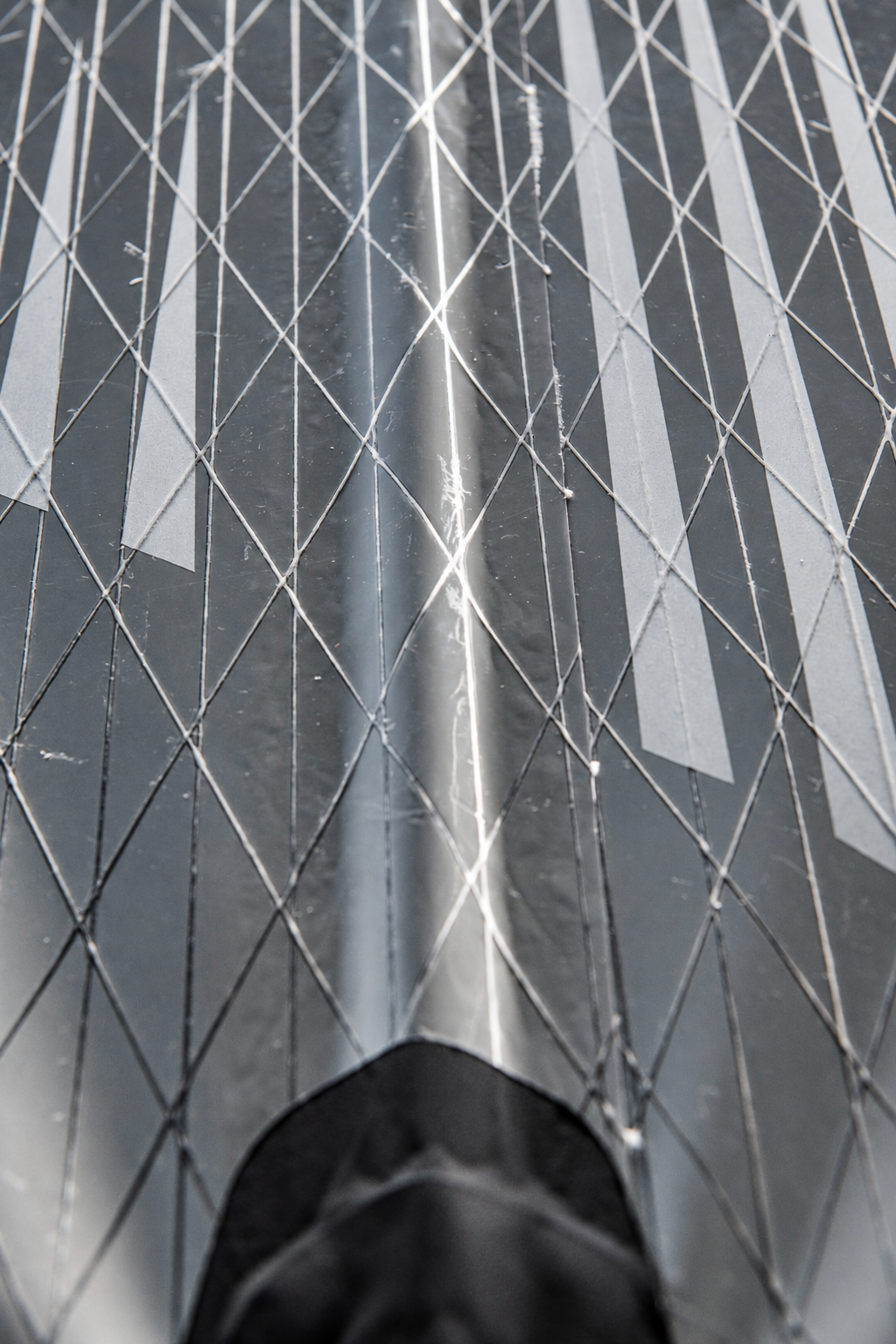
SS™ S-SHAPING BATTENS
Pre-shaped panels support the designed foil.
More accurate foil • Stable draft • Better acceleration • Consistent handling, higher windrange.
TECHNICAL EXPLANATION
S-Shaping panels are profiled to work with the sail’s intended three-dimensional shape to realease or power up according to wind intensity. This helps the foil lock into its designed depth and twist distribution.
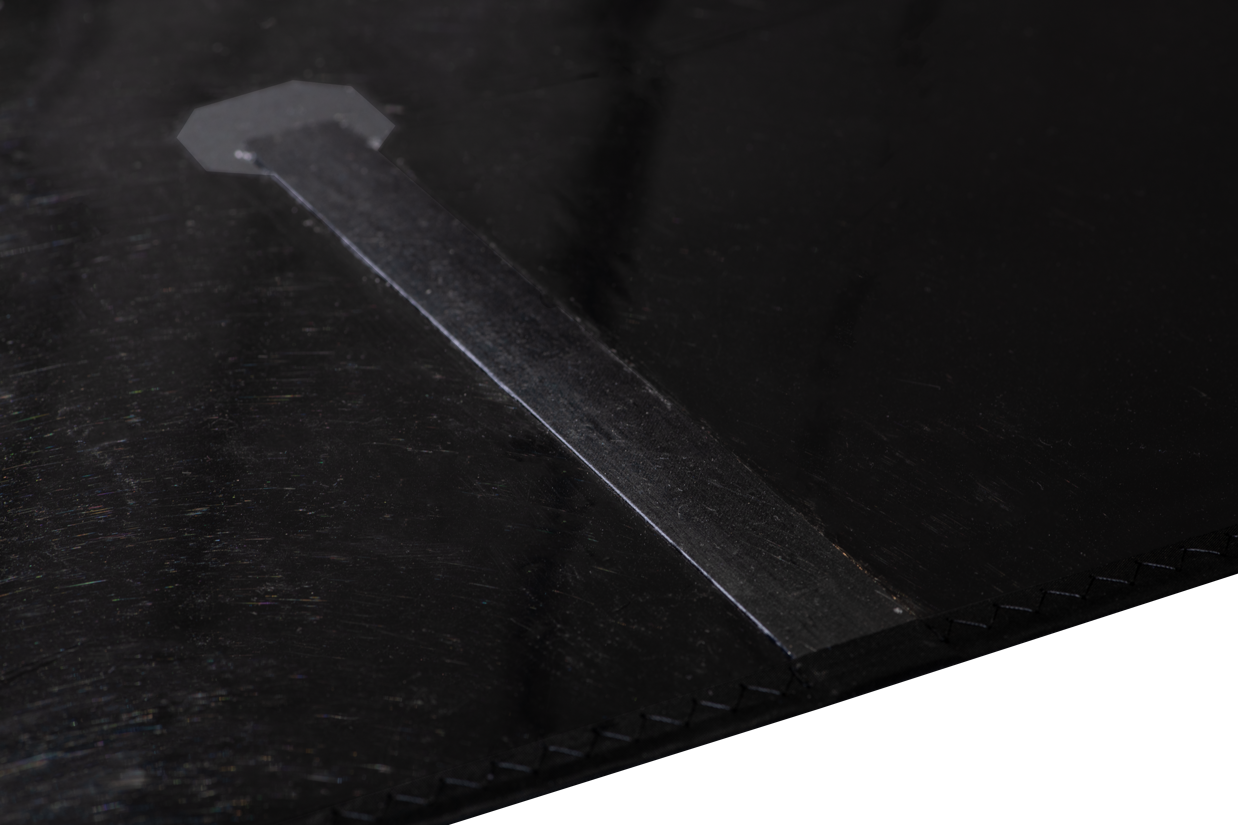
AMB™ AERO MINIBATTENS ULTRA BOND

Bonded minibattens for clean leech control.
Cleaner leech • Less flutter • Lower weight • Reduced stitching • Smooth airflow
TECHNICAL EXPLANATION
Ultra Bond minibattens are integrated with a low-bulk bonded construction to control local leech movement without heavy stitched pockets. They support aerodynamic stability while keeping the trailing edge light and clean
DRC™ DUAL RING CLEW SET UP
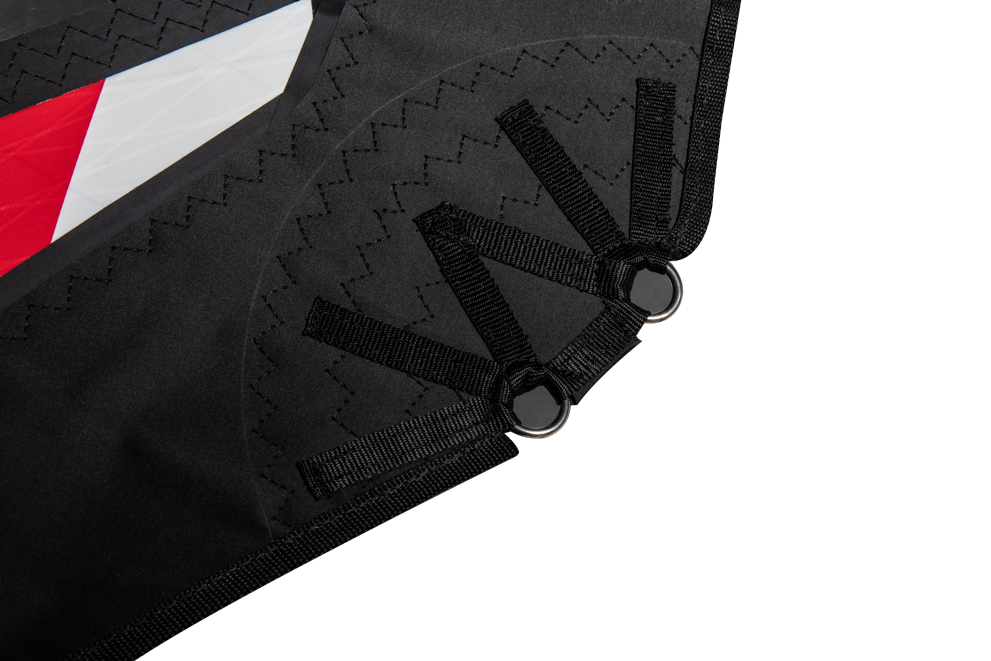
Stronger than conventional eyelets • Easy to replace while travelling • Two clew positions • Wave and bump & jump tuning • Lower ring recommended
TECHNICAL EXPLANATION
DRC uses two reinforced clew rings instead of a conventional fixed eyelet. The system provides a stronger connection and, if damaged, is much easier to replace even while travelling.
The lower ring is designed for wave riding and is our recommended setting for normal use. The higher ring offers an alternative clew position for bump & jump conditions.
For maximum control and the intended sail feeling, we recommend using the lower ring.
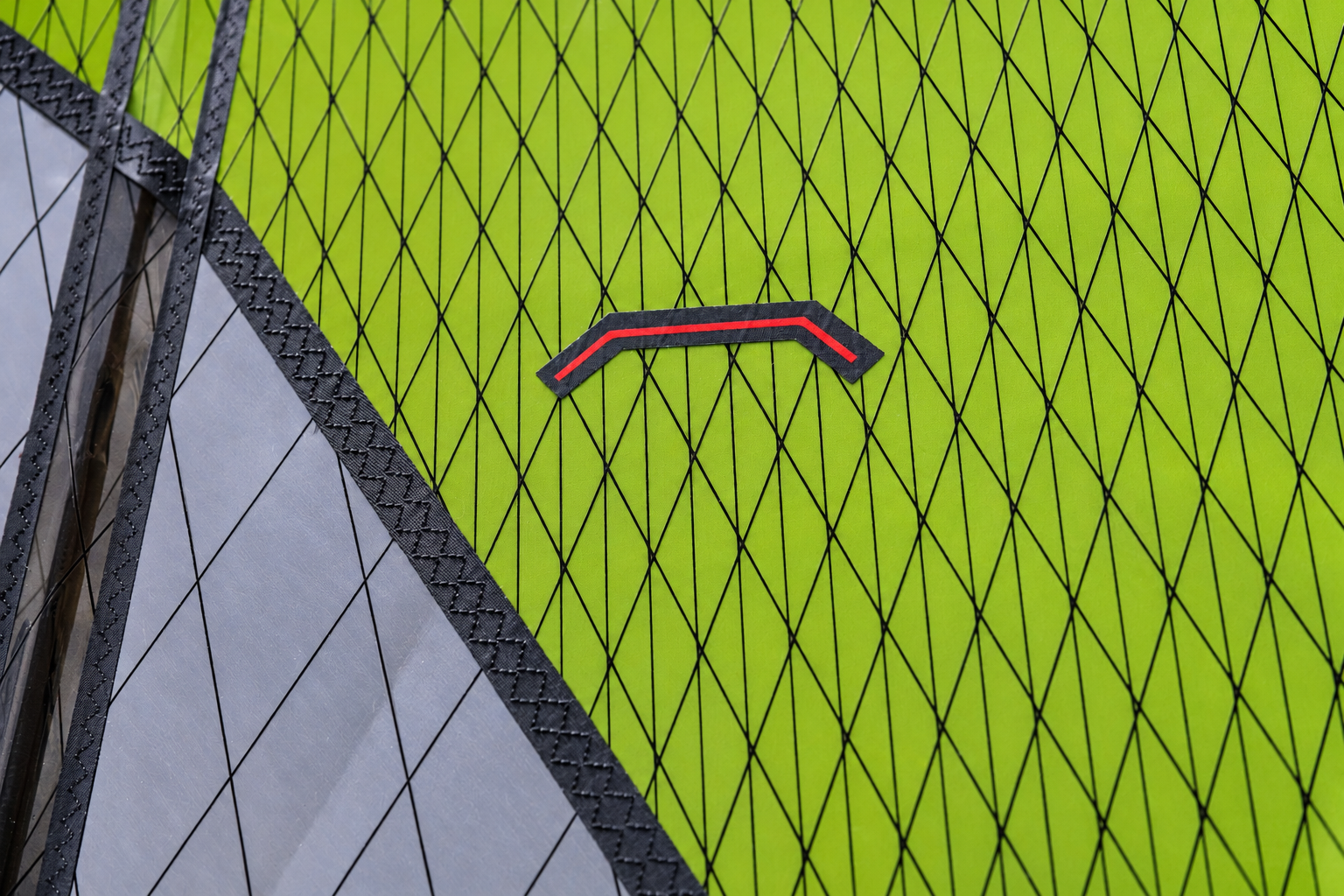
DBS™ DOWNHAUL BEST SETTING
 A simple visual reference for finding the correct downhaul tension. Faster rigging • Repeatable trim • Correct twist • Better balance • Maximum designed wind range
TECHNICAL EXPLANATION
For the recommended Point-7 downhaul setting, apply tension until the X-Ply laminate around the reference mark begins to loosen. This visual change shows that the sail has reached its designed downhaul tension and twist profile. Use the reference point as your starting setting, then make only small adjustments according to wind strength and personal preference.
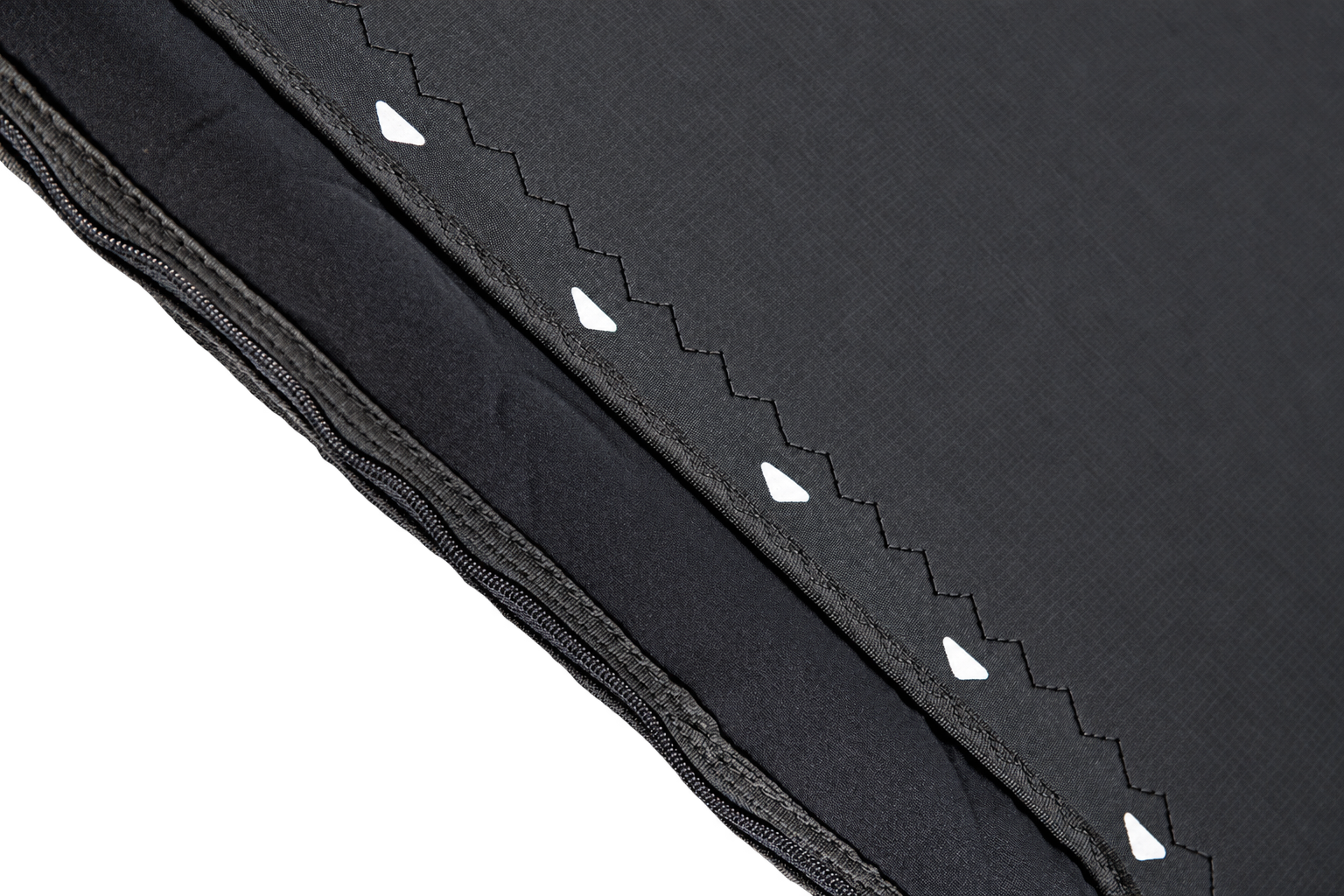
BHPM™ BOOM HEIGHT POSITIONING MARKS

Visual reference marks for faster and more consistent boom positioning. Faster rigging • Repeatable boom height • Easier tuning • Consistent stance • Less trial and error
TECHNICAL EXPLANATION
BHPM places clear reference marks along the boom opening area of the mast sleeve.The marks make it easier to remember and reproduce your preferred boom height every time you rig the sail, reducing setup time and helping maintain a consistent sailing position. Once you have found the boom height that works best for your stance, board and conditions, simply use the same reference mark at the next session. Small boom-height adjustments can still be made depending on wind strength, board width and personal preference.
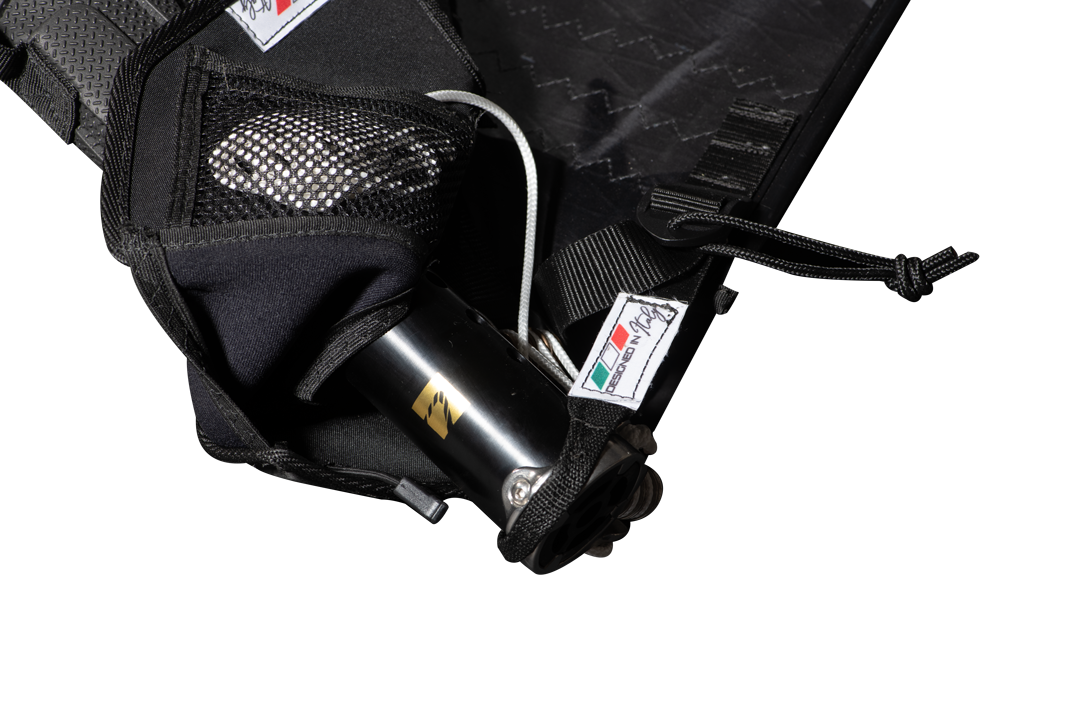
RSBP™ ROPE STASH BASE PAD
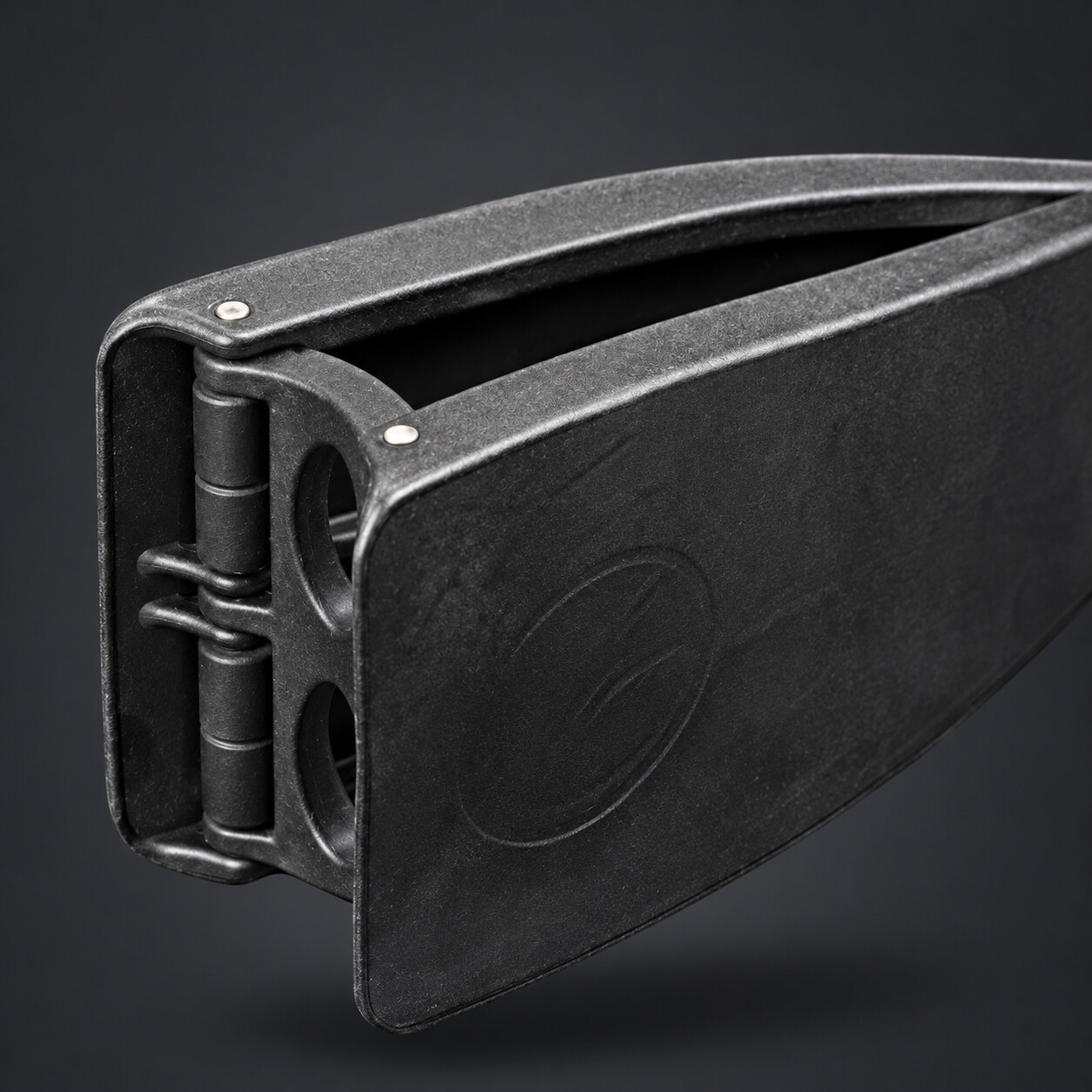
Integrated storage for the excess downhaul rope inside the sail base protector. Cleaner rigging • No loose rope • Faster setup • Protected rope • Reduced snagging • Neater base area
TECHNICAL EXPLANATION
RSBP integrates a dedicated rope-stash area directly into the sail base pad. After setting the downhaul, the remaining rope can be stored securely inside the protected base section instead of being left loose around the extension and mast base. This keeps the rig cleaner, reduces the risk of the rope catching during handling, and protects the excess line from unnecessary wear.
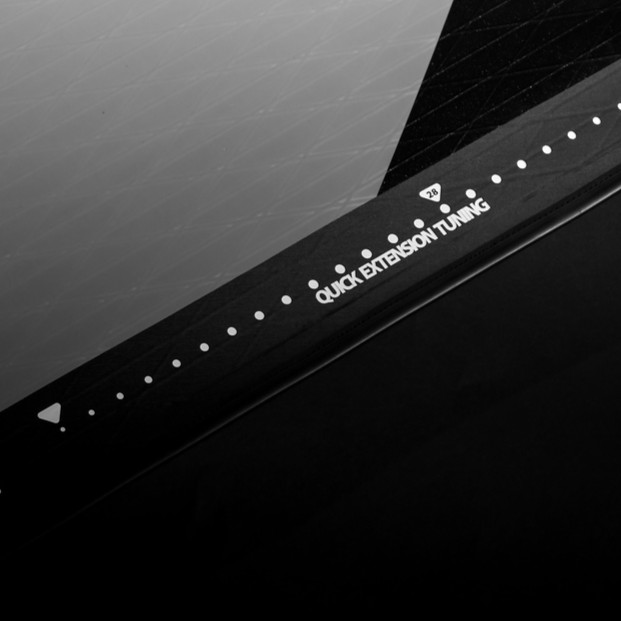
RSES™ REAL SCALE EXTENSION SETTING
A visual measurement system that gives the exact extension setting without relying on printed numbers. Exact extension setting • Works with any extension brand • No numbers required • Faster rigging • Easy visual reference • Reliable even on older extensions
TECHNICAL EXPLANATION
RSES uses two reference triangles printed directly on the sail. Place the extension pulleys on the first triangle and the extension adjustment ring on the second triangle. The distance between the two points gives you the exact extension setting required for the sail.There is no need to read or calculate the numbers printed on the extension.
SLALOM FIN | SLALOM FOIL

AIM™ AUTO INSERT MAST
Integrated sphere pin for fast automatic mast insertion.
Faster rigging • Less snagging • Easier mast insertion. Safer.
TECHNICAL EXPLANATION
AIM guides the mast naturally over the sail pin in the luff sleeve during rigging.Integrated sphere pin for fast automatic mast insertion.
(QBOND VERSION) Q-BOND™ ULTRASONIC FUSION
Ultrasonically fused structural panels.The Whole sail body is not stitched.
Lower weight • Cleaner aerodynamics • Faster reflex • More precise load transfer • Reduced seam bulk. 30% less swing weight.
TECHNICAL EXPLANATION
Q-BOND replaces traditional stitched panel joining with controlled ultrasonic fusion in the full sail body. Only the mast sleeve is stitched to the sail body. The process creates a clean, continuous bond with less thread, less seam bulk from reinforcements, and more direct material-to-material load transfer.
(ON STITCHED VERSION) DTSP 25™ DOUBLE TRI-STITCH 25 MM PANELS
Double tri-stitching across a 25 mm structural seam connection
Higher seam strength • Better load distribution • Increased durability • Stable panel alignment. Cuts don’t travel across the different panels limiting damage.
TECHNICAL EXPLANATION
Two rows of triangular stitching secure a wide 25 mm panel overlap. The stitch geometry spreads loads over a larger area and resists seam opening under repeated high tension.
OP™ OVERLAPPING PANEL CONSTRUCTION™
Wide structural overlaps distribute sail loads and takes out batten sleeve pockets
Better load distribution • Stronger structure • Stable profile • Improved durability. Less stitching. Less weight.
TECHNICAL EXPLANATION
Major body panels overlap across carefully defined load zones instead of meeting only at a narrow seam. The larger bonded or stitched contact area spreads tension progressively through the sail body and supports long-term shape stability.
RSC™ REDUCED-SEAM CONSTRUCTION
Fewer structural seams for a cleaner sail body.
Lower weight • Cleaner surface • More uniform flex • Reduced seam drag
TECHNICAL EXPLANATION
Panel layout is engineered to reduce the number of seams needed to build the designed shape. Every removed seam eliminates thread, local stiffness and unnecessary construction weight while keeping the required structural support
UV-SHIELD™ 100% UV-SHIELD™ LAMINATE
UV-resistant laminate throughout the specified sail areas.
Longer material life • Better appearance retention • Stable performance • Reduced UV ageing
TECHNICAL EXPLANATION
UV-SHIELD laminate uses a multi-layer film structure selected to reduce degradation from prolonged sun exposure while maintaining the transparency, stiffness and structural response required by the sail design. These materials can be crashed, squeezed, pinched but will flatten out without craking, unlike transparent monofilm. The reason of 10x the price.
5MIL™ BASE 5MIL IMPACT X-PLY
Heavy-duty 5 mil X-Ply in high-impact base zones.
Higher impact resistance • Better puncture protection • Stronger lower sail • Longer service life. No Stitching on base panel with full Kevlar reinforcements for stronger hold in body & hook crashes.
TECHNICAL EXPLANATION
A thicker 5 mil X-Ply is used in the lower sail where impacts, board contact and rigging abuse are most likely. The reinforced film and fibre grid increase puncture and tear resistance where it matters most. While the higher panels range from 3.5 to 4mil to decrease weight.
KLR™ KEVLAR LOAD REINFORCEMENT
Aramid reinforcement in critical high-load zones. High tensile strength • Better tear resistance • Localised reinforcement • Low weight
TECHNICAL EXPLANATION
Kevlar reinforcement is placed where concentrated loads and repeated flex can damage conventional laminate. Its high tensile strength supports the surrounding panel structure without requiring large heavy patches.If you see some yellow light fluff in some areas, you know what is hiding under.
CLS™ CONTINUOUS LUFF SLEEVE
One piece mast sleeve.
Cleaner leading edge • Consistent mast alignment • Smooth load transfer • Stable profile. Lighert and reactive.
TECHNICAL EXPLANATION
The luff sleeve is built as a continuous structural element to maintain alignment along the mast, reduce discontinuities and give the front of the sail a smooth, controlled relationship with mast bend.
(on no cam) DLP™ DYNAMIC LUFF PANEL
Dacron transition panel between mast sleeve and sail body.
Chop absorption • Smoother power delivery • Cleaner profile transition • More comfort • Better control
TECHNICAL EXPLANATION
A premium Dacron luff panel creates a progressive flex zone between the comparatively rigid mast sleeve and the sail body. The material absorbs sharp chop-induced loads and allows the profile to settle naturally instead of transmitting every shock directly into the foil.
SBT™ SYMMETRIC BATTEN TENSIONER
Balanced batten loading from both sides
Cleaner profile • More precise tuning • Better stability • Consistent reflex. Easier to repair
TECHNICAL EXPLANATION
The SBTis designed so tension the structure symmetrically around the batten overlap. This reduces local distortion and helps the sail keep a clean, repeatable foil under changing wind loads and a batten in the centre of the sail. Sail is the same both tacks.
SS™ S-SHAPING BATTENS
Pre-shaped panels support the designed foil.
More accurate foil • Stable draft • Better acceleration • Consistent handling, higher windrange.
TECHNICAL EXPLANATION
S-Shaping panels are profiled to work with the sail’s intended three-dimensional shape to realease or power up according to wind intensity. This helps the foil lock into its designed depth and twist distribution.
AMB™ AERO MINIBATTENS ULTRA BOND
Bonded minibattens for clean leech control.
Cleaner leech • Less flutter • Lower weight • Reduced stitching • Smooth airflow
TECHNICAL EXPLANATION
Ultra Bond minibattens are integrated with a low-bulk bonded construction to control local leech movement without heavy stitched pockets. They support aerodynamic stability while keeping the trailing edge light and clean
DBS™ DOWNHAUL BEST SETTING
A simple visual reference for finding the correct downhaul tension. Faster rigging • Repeatable trim • Correct twist • Better balance • Maximum designed wind range
TECHNICAL EXPLANATION
For the recommended Point-7 downhaul setting, apply tension until the X-Ply laminate around the reference mark begins to loosen. This visual change shows that the sail has reached its designed downhaul tension and twist profile. Use the reference point as your starting setting, then make only small adjustments according to wind strength and personal preference.
BHPM™ BOOM HEIGHT POSITIONING MARKS
Visual reference marks for faster and more consistent boom positioning. Faster rigging • Repeatable boom height • Easier tuning • Consistent stance • Less trial and error. Includes Zipper for closing boom opening gap.
TECHNICAL EXPLANATION
BHPM places clear reference marks along the boom opening area of the mast sleeve.The marks make it easier to remember and reproduce your preferred boom height every time you rig the sail, reducing setup time and helping maintain a consistent sailing position. Once you have found the boom height that works best for your stance, board and conditions, simply use the same reference mark at the next session. Small boom-height adjustments can still be made depending on wind strength, board width and personal preference.
RSBP™ ROPE STASH BASE PAD
Integrated storage for the excess downhaul rope inside the sail base protector. Cleaner rigging • No loose rope • Faster setup • Protected rope • Reduced snagging • Neater base area
TECHNICAL EXPLANATION
RSBP integrates a dedicated rope-stash area directly into the sail base pad. After setting the downhaul, the remaining rope can be stored securely inside the protected base section instead of being left loose around the extension and mast base. This keeps the rig cleaner, reduces the risk of the rope catching during handling, and protects the excess line from unnecessary wear.
RSES™ REAL SCALE EXTENSION SETTING
A visual measurement system that gives the exact extension setting without relying on printed numbers. Exact extension setting • Works with any extension brand • No numbers required • Faster rigging • Easy visual reference • Reliable even on older extensions
TECHNICAL EXPLANATION
RSES uses two reference triangles printed directly on the sail. Place the extension pulleys on the first triangle and the extension adjustment ring on the second triangle. The distance between the two points gives you the exact extension setting required for the sail.There is no need to read or calculate the numbers printed on the extension.
RSES™ REAL SCALE EXTENSION SETTING
Full race profile control with only three cams. Race-level stability • Less hardware • Lower weight • Faster rotation • Reduced friction, more release under the gusts.
TECHNICAL EXPLANATION
Point-7 racing architecture uses three carefully positioned cambers to stabilise the race foil without relying on a fourth cam. The system is engineered around efficient pressure distribution, rotation and sleeve geometry rather than simply adding more hardware.
POINT-7 CONSTRUCTION DETAILS / ZERO27
THE DETAILS THAT BUILD THE PERFORMANCE.
A sail is not defined by one headline material. Performance comes from how panels, seams, battens, reinforcements, mast-sleeve architecture and profile systems work together. Explore each technology below, then jump directly to the sail construction that uses it.

Q-BOND™
Ultrasonically fused structural panels.
Lower weight • Cleaner aerodynamics • Faster reflex • More precise load transfer • Reduced seam bulk. 30% less swing weight.
TECHNICAL EXPLANATION
Q-BOND replaces traditional stitched panel joining with controlled ultrasonic fusion in selected sail sections. The process creates a clean, continuous bond with less thread, less seam bulk and more direct material-to-material load transfer.

OP™
Wide structural overlaps distribute sail loads and takes out batten sleeve pockets
Better load distribution • Stronger structure • Stable profile • Improved durability. Less stitching. Less weight.
TECHNICAL EXPLANATION
Major body panels overlap across carefully defined load zones instead of meeting only at a narrow seam. The larger bonded or stitched contact area spreads tension progressively through the sail body and supports long-term shape stability.

DTSP 25™
Double tri-stitching across a 25 mm structural seam connection
Higher seam strength • Better load distribution • Increased durability • Stable panel alignment. Cuts don't travel across the different panels limiting damage.
TECHNICAL EXPLANATION
Two rows of triangular stitching secure a wide 25 mm panel overlap. The stitch geometry spreads loads over a larger area and resists seam opening under repeated high tension.

RSC™
Fewer structural seams for a cleaner sail body.
Lower weight • Cleaner surface • More uniform flex • Reduced seam drag
TECHNICAL EXPLANATION
Panel layout is engineered to reduce the number of seams needed to build the designed shape. Every removed seam eliminates thread, local stiffness and unnecessary construction weight while keeping the required structural support.

UV-SHIELD™
UV-resistant laminate throughout the specified sail areas.
Longer material life • Better appearance retention • Stable performance • Reduced UV ageing
TECHNICAL EXPLANATION
UV-SHIELD laminate uses a multi-layer film structure selected to reduce degradation from prolonged sun exposure while maintaining the transparency, stiffness and structural response required by the sail design. These materials can be crashed, squeezed, pinched but will flatten out without craking, unlike transparent monofilm. The reason of 10x the price.

5MIL™
Heavy-duty 5 mil X-Ply in high-impact base zones.
Higher impact resistance • Better puncture protection • Stronger lower sail • Longer service life
TECHNICAL EXPLANATION
A thicker 5 mil X-Ply is used in the lower sail where impacts, board contact and rigging abuse are most likely. The reinforced film and fibre grid increase puncture and tear resistance where it matters most. While the higher panels range from 3.5 to 4mil to decrease weight.

KLR™
Aramid reinforcement in critical high-load zones.
High tensile strength • Better tear resistance • Localised reinforcement • Low weight
TECHNICAL EXPLANATION
Kevlar reinforcement is placed where concentrated loads and repeated flex can damage conventional laminate. Its high tensile strength supports the surrounding panel structure without requiring large heavy patches.If you see some yellow light fluff in some areas, you know what is hiding under.

CLS™
One piece mast sleeve.
Cleaner leading edge • Consistent mast alignment • Smooth load transfer • Stable profile. Lighert and reactive.
TECHNICAL EXPLANATION
The luff sleeve is built as a continuous structural element to maintain alignment along the mast, reduce discontinuities and give the front of the sail a smooth, controlled relationship with mast bend.

DLP™
Dacron transition panel between mast sleeve and sail body.
Chop absorption • Smoother power delivery • Cleaner profile transition • More comfort • Better control
TECHNICAL EXPLANATION
A premium Dacron luff panel creates a progressive flex zone between the comparatively rigid mast sleeve and the sail body. The material absorbs sharp chop-induced loads and allows the profile to settle naturally instead of transmitting every shock directly into the foil.

3CR™
Full race profile control with only three cams.
Race-level stability • Less hardware • Lower weight • Faster rotation • Reduced friction, more release under the gusts.
TECHNICAL EXPLANATION
Point-7 racing architecture uses three carefully positioned cambers to stabilise the race foil without relying on a fourth cam. The system is engineered around efficient pressure distribution, rotation and sleeve geometry rather than simply adding more hardware.

SBT™
Balanced batten loading from both sides
Cleaner profile • More precise tuning • Better stability • Consistent reflex. Easier to repair
TECHNICAL EXPLANATION
The SBTis designed so tension the structure symmetrically around the batten overlap. This reduces local distortion and helps the sail keep a clean, repeatable foil under changing wind loads and a batten in the centre of the sail. Sail is the same both tacks.

SS™
Pre-shaped panels support the designed foil.
More accurate foil • Stable draft • Better acceleration • Consistent handling, higher windrange.
TECHNICAL EXPLANATION
S-Shaping panels are profiled to work with the sail’s intended three-dimensional shape to realease or power up according to wind intensity. This helps the foil lock into its designed depth and twist distribution.

AMB™
Bonded minibattens for clean leech control.
Cleaner leech • Less flutter • Lower weight • Reduced stitching • Smooth airflow
TECHNICAL EXPLANATION
Ultra Bond minibattens are integrated with a low-bulk bonded construction to control local leech movement without heavy stitched pockets. They support aerodynamic stability while keeping the trailing edge light and clean.

AM™
Light local leech support where full battens are unnecessary.
Less flutter • Cleaner exit • Low added weight • Better high-wind control
TECHNICAL EXPLANATION
Strategically placed minibattens stabilise small sections of the leech and maintain the designed exit shape without the weight and stiffness of a full-length batten.

AIM™
Integrated sphere pin for fast automatic mast insertion.
Faster rigging • Less snagging • Easier mast insertion. Safer.
TECHNICAL EXPLANATION
AIM guides the mast naturally over the sail pin in the luff sleeve during rigging.

DRC™
Stronger, replaceable dual-ring clew connection with two tuning positions.
Stronger than conventional eyelets • Easy to replace while travelling • Two clew positions • Wave and bump & jump tuning • Lower ring recommended
TECHNICAL EXPLANATION
DRC uses two reinforced clew rings instead of a conventional fixed eyelet. The system provides a stronger connection and, if damaged, is much easier to replace even while travelling. The lower ring is designed for wave riding and is our recommended setting for normal use. The higher ring offers an alternative clew position for bump & jump conditions. For maximum control and the intended sail feeling, we recommend using the lower ring whenever possible.

DBS™
A simple visual reference for finding the correct downhaul tension.
Faster rigging • Repeatable trim • Correct twist • Better balance • Maximum designed wind range
TECHNICAL EXPLANATION
For the recommended Point-7 downhaul setting, apply tension until the X-Ply laminate around the reference mark begins to loosen and relax. This visual change shows that the sail has reached its designed downhaul tension and twist profile. Use the reference point as your starting setting, then make only small adjustments according to wind strength and personal preference. The correct downhaul allows the sail to release properly in the upper section while maintaining the designed profile and stability.

BHPM™
Visual reference marks for faster and more consistent boom positioning.
Faster rigging • Repeatable boom height • Easier tuning • Consistent stance • Less trial and error
TECHNICAL EXPLANATION
BHPM places clear reference marks along the boom opening area of the mast sleeve. The marks make it easier to remember and reproduce your preferred boom height every time you rig the sail, reducing setup time and helping maintain a consistent sailing position. Once you have found the boom height that works best for your stance, board and conditions, simply use the same reference mark at the next session. Small boom-height adjustments can still be made depending on wind strength, board width and personal preference.

RSBP™
Integrated storage for the excess downhaul rope inside the sail base protector.
Cleaner rigging • No loose rope • Faster setup • Protected rope • Reduced snagging • Neater base area
TECHNICAL EXPLANATION
RSBP integrates a dedicated rope-stash area directly into the sail base pad. After setting the downhaul, the remaining rope can be stored securely inside the protected base section instead of being left loose around the extension and mast base. This keeps the rig cleaner, reduces the risk of the rope catching during handling, and protects the excess line from unnecessary wear. The result is a tidier, safer and more practical rigging setup, especially when frequently rigging and derigging.

RSES™
A visual measurement system that gives the exact extension setting without relying on printed numbers.
Exact extension setting • Works with any extension brand • No numbers required • Faster rigging • Easy visual reference • Reliable even on older extensions
TECHNICAL EXPLANATION
RSES uses two reference triangles printed directly on the sail. Place the extension pulleys on the first triangle and the extension adjustment ring on the second triangle. The distance between the two points gives you the exact extension setting required for the sail. There is no need to read or calculate the numbers printed on the extension. Because the measurement is taken directly between the two physical reference points, the system also works if you use an extension from another brand or an older extension where the printed measurements have worn off. The result is a simple, fast and repeatable way to obtain the correct extension setting every time you rig.
SAIL-BY-SAIL / TECHNOLOGY MAP
WHICH TECHNOLOGIES DOES YOUR SAIL USE?
Choose a construction below. Every technology badge links back to its explanation above, while VIEW SAIL takes you directly to the current zero27 product page. The sail map below keeps the confirmed model-specific construction technologies; rigging and setup features 16–20 are listed above separately.
SALTpro
STITCHED
SALTpro
Q-BOND
SPY
STITCHED
SLASH
Q-BOND
RUSH-1
STITCHED
RUSH-2
STITCHED
AC-0
STITCHED / SMOKE GREY
AC-0
STITCHED / PEARL WHITE
AC-0
Q-BOND
AC-3
STITCHED
AC-1 LTD
Q-BOND
AC-1 LTD
STITCHED
9+
STITCHED
F1
Q-BOND / STRUCTURAL STITCHING
F0
STITCHED